 Apple Podcasts
 Spotify
 Castbox
 Goodpods
 JioSaavn
 Overcast
 Anghami
 Fountain
 Gaana
Gaana PlayerFM
 Rumble
 YouTube
 RSS Feed






"Unlock your potential with critical thinking - discover why it's essential to success in education!"In this episode with Mark Emerson, you will learn:1. What is the "disaster" in mass education that Mark Emerson is trying to fix?2. How does learning algebra help to develop critical and independent thinking?3. What does it mean for mathematics to be subjective rather than objective?Mark Emerson is an expert math teacher and the best math teacher in America. He is on a mission to solve the disaster in mass education and has created Algebra Victory, an online course to help students learn algebra and develop their critical thinking skills.
This podcast uses the following third-party services for analysis:
Chartable - https://chartable.com/privacy
Podcorn - https://podcorn.com/privacy
A disaster. There's a disaster in mass education. It's been there for a long time. It's gotten much worse in the last 15 years. But even back 50, 60 years ago was a disaster. And why is this true? Someone said it was true, but is it really true? And then they start looking for reference points. And this is the development of critical thinking. Especially with the increase in technology and opportunities we have, we should be able to increase our educational capacity, not decrease it. Welcome back to the Purple political podcast. I'm your host, Radell Lewis. We are back with another episode. Little caveat, I did mess up in terms of technical recording stuff, so my last episode got completely scratched. So I'm making sure that this doesn't happen this time, of course. So today we're going to be talking about episode number 14, and we have a conversation regarding the importance of critical thinking and education and the value of something known as algebra victory. And my guest is going to dive into what that is and why it can be a valuable asset in society currently. So before we dive into that, I'm going to be reading off a review of the podcast to get some feedback, critical feedback, whether it's positive or negative. So today's review was indicated that I love news podcasts. This one is more commentary on the news. While I didn't agree with everything, I appreciate the look it to other people's opinion. So appreciate that review, of course. And that's what we try to do, have different opinions, really dive into the nitty gritty of the solutions that we're discussing without letting other kind of biases kind of shadow our thinking. So with that said, we're going to be diving right into it. I have my guest here, Mark Emerson, and I'm going to allow him to introduce himself and tell him what he's about. Hi, Ridell. Thanks for having me on your show. It's an honor to be here. I'm an expert math teacher. People call me the best math teacher in America. I really know what I'm doing and it has been my life goal to solve what I'll call a disaster. There's a disaster in mass education. It's been there for a long time. It's gotten much worse in the last 15 years. But even back 50, 60 years ago, it was a disaster. Let's talk a little bit about what that means on the show here. And my goal is to fix that. That's a big job. It's a big tall order. The problem is very big. And to solve the problem will be of tremendous benefit to children and to our entire society. And then I want to put a word out to your listeners, your viewers, that I need help. And there are seven ways people can help with algebra victory. And I want to talk about that. And they'll talk about how algebra victory when we teach algebra well and kids actually learn it, then they develop logical and critical thinking skills and they learn to think for themselves rather than getting habituated to well whatever the authority says, whatever the teacher says, whatever the news people say or the politicians say that must be what the truth is. And that is a big problem right now. In fact, it's the biggest problem in the world, perhaps. So this is my way of battling against the dark side, is to build Algebra Victory. So Algebra Victory will be taught online and it's my masterpiece. I'm taking everything I know and building it into a beautiful online system that's going to launch in the fall of this year. So there's my intro, and we can take it wherever you want to go. All right, excellent. For the most part I very much agree to that sentiment that in terms of students that they are losing the sense of critical thought and being able to critically think about different topics instead of getting like force fed. It from different sources, whether that's higher education teachers, professors, whether that's social media media or some other higher authority. People should be able to think for themselves and critically analyze different things. And I'm curious to see how you believe algebra can be a gateway to such things. So to kind of really start off the conversation, can you tell us what Algebra Victory is and why it will be useful for students in learning these skills? This is a lot to see. Those are two big questions. Let's take them one at a time. So Algebra Victory is a first year algebra course. It's important to understand the educational context here. Before we learn algebra, we need to learn arithmetic. And when students enroll in Algebra Victory, it's an online course which we're going to initially market to homeschoolers. Homeschool is very large now and is growing quickly. And Homeschool parents don't have any good choices for algebra. This is way, way better than anything that's out there. And I have lots of parents who are already clamoring. They're ready to enroll, but we're not ready to enroll them yet. So the arithmetic is necessary first. So students have to pass an admission exam in arithmetic before they can enroll. But I have a little more to say about that. We'll talk about the arithmetic angle a little later, and then their algebra course happens. And after that will be other courses we will develop later, starting with geometry and higher math courses after that. Now, the thing is, it's important to understand that algebra is hard. It's much harder than arithmetic. There are millions and millions of people who are able to learn arithmetic, and there are tens of thousands of elementary school teachers, and there are many good books, although it's been polluted in the last few years. Instead of teaching the children how to multiply, they're teaching about how to think, about whether they're going to switch their gender. But the way to teach it is out there. And many people learn the arithmetic, but then they run into a brick wall with algebra. Actually, I call it a mountain. I call it Algebra Mountain because it gets much harder. And there are I would I like to divide the population into three groups. I'll call them the Math Smart 10%, the middle 80%, and the low IQ 10%. Now, the kids in the Math Smart 10%, they're able to learn the algebra. They may have a hard time. If they have an okay teacher, they can probably learn it, although with Common Core and some of the stuff that's going on now, even they may have difficulty if we just went back 15 years, they'd be okay then. Now, the low IQ 10%, these kids have intellectual disabilities, and they shouldn't even be taking algebra. It's not appropriate. But the middle 80%, which is the vast majority of people, average, above average, below average, just your typical people. These people take algebra and they wipe out, and I'm sure some of your listeners can identify with this. It's hard, and many teachers try to teach them, but they don't know how. The way to teach it is the trick, and that's what I'm an expert at. Pardon me. So with algebra victory, they will succeed at algebra. Now, to get to your second question, I have plenty more to say about all that. To get to your second question, when I teach them the algebra, they are learning a complex set of skills. There are just thousands of concepts, facts, and skills that they have to learn and they have to integrate. It all has to fit together in fascinating ways. And when they actually learn that, they see this system that works so beautifully. This is a tremendous learning experience for them. Now, another thing that happens when I'm teaching, when I'm showing the students what's going on in the algebra, I'm teaching a concept or I'm teaching a theory or an idea, I show it to them in a way that they can understand it. Now, it's important I don't teach it by saying, this is just how it is, memorize it, do the problem. That's not the way the algebra is not true because I said so. I have a degree in mathematics from UCLA. I'm an authority on this. I'm your teacher. If you're taking algebra victory, and if I tell you this is how it is, that's not why it's that way. It's not that way because some book says so. It's true because the algebra is inherently true. It's absolutely true. It's true all by itself. And when the students get to that point, when I take them, my job is to get them to where they see that I take them through a series of steps and then they go, oh, wow, I get it. That's cool, wow. Then they own it. They own it because they understand the absolute truth in that concept. We do that hundreds of times in the course. And that what they're doing is they're building a sophisticated intellectual structure in their mind that they know is true, not because anyone told them it was true, but because they can see that it's true. And when they have that framework of reference in the math, then they look at other subjects and they start looking, well, wait a minute, why is this true? Someone said it was true, but is it really true? And then they start looking for reference points. And this is the development of critical thinking and independent thinking so that they can figure out what's true and what's not. Now, it's much harder. You look at politics or you look at biology, even these are much more complicated subjects than the mathematics. It's harder to know the truth. But the math is very pure and beautiful, and they are able to see that clearly, and that gives them a reference point. Oh, I get it now. They become much more solid, in fact. Well, go ahead, tell me what you're I have so much to say. I don't want to monopolize the conversation here. Yeah, no worries. From what it sounds like, obviously algebra is very essential and it kind of introduces the concept of critical thinking into your brain because like you said, you're not learning it or you're not learning the solution because someone like a teacher told you that this is the right answer. No, there's a certain way of process. There's a certain process you have to go through to find the answer. And that requires you to be able to think for yourself and critically think. To the then you know it's the right answer. It's not the right answer because the teacher told you it was the answer in the back of the book. It's the right answer because you know it's the right answer. Exactly. So, yeah, I definitely think that is essential for the most part. Do you believe that in terms of the critical thinking process? Do you think algebra is the best way to introduce the idea or do you think there's other strategies that is either on par or at the very least is possible in terms of teaching students? Well, that's an interesting question. I'm not sure I know the answer. I know that algebra is a very powerful way in terms of teaching other subjects. It's going to be much more difficult to get that solid reference point. The mathematics is very pure and it's very isolated from the real world, and yet it's very integrated into our spiritual awareness. Because actually, if I could just shift the subject slightly here. One of the things I teach in algebra victory is the mysteries. There's a lot of mysteries. It's very fascinating. And when some students who are sensitive, not every student will start to realize and experience that the divine God is actually in the math. It's actually there. And they may start to realize that the math is actually in them. Mathematics is completely internal, it's completely subjective, there's nothing objective about it. Whereas science, there's a sharp line between mathematics and science and other subjects because in science you have to deal with objective reality things that are out in the world outside of you and measuring them and observing them and counting them. And then you use mathematics and science to look for relationships and make predictions and calculations. The mathematics is completely pure. We use pencils and paper and computers to teach it and to understand it and to work problems. But ultimately it's all subjective. So it's a beautiful place to learn that critical thinking. Other subjects I think it's good to learn many subjects and I think that having the algebra in the mix enhances the other subjects. And I've had many students tell me this oh, I'm thinking more clearly in my other classes because of what I'm learning in your algebra class and so it pays off all over the place. Well, algebra is very important for the Stem fields which is science, technology, engineering and mathematics. But even if a student decides not to go that direction and doesn't even take any more math classes after algebra or Algebra Victory, they may never solve another equation or factor another polynomial for the rest of their life. But what they learned as they were learning to solve equations and learning to factor polynomials and all the other many, many things we do in Algebra Victory, it's developing their intellect. Their intellect is becoming more mature and that stays with them. It's just that they don't use that more mature intellect to do more algebra problems. They're doing it to do whatever they're doing in their job and their work and their life and their activities. They have become a more mature person and part of that is that they have learned how to think independently and critically. Well, I guess I'm on the air here so please go to Algebra Victory.org and learn about what we're doing and we need your help and so please go there, visit the website. There are seven things you can do to help to make this a reality. I can't do it by myself. Math education is a disaster, I know how to fix it but I need your help to do that. So please visit Algebra Victory and I guess we'll wait for Ridell to get back. All right, sorry about that. Well, I just gave a little plug for my website while you were off. All right, sounds good. So one thing that you said that was very interesting that I haven't really heard in terms of these two terminologies in correspondence with one another is math, algebra and the word subjective. So I never heard someone call math really subjective. So can you kind of explain what you mean by that? Well, subjective means what we are experiencing in our own mind, in our own being, in our own consciousness. We are the subject. It's internal to us. And my son Jonathan is here, and he's sitting here next to me. He's not on camera. He can help me with this. Whereas objective is things that are outside of us, we are the observer looking at things outside of us. We don't need to do that with mathematics, it's entirely subjective. You'll never find numbers in the real world. You can measure things and invent units, and you can say, this is one thing and that's another thing. But that is a subjective choice to measure in inches versus measuring in centimeters. That's a subjective choice. And the number of centimeters you'll have is going to be different from the number of inches you have. So the pure mathematical component is strictly something you will only find in the mind and not in the world. That makes sense. It's not an object. There is no such object in the world as the number one. Yeah. Well, let me ask you this for now. This is a question I asked, I think, in less than one. How many of the number five are there in the whole world? Well, every book in the library has a page five. There's a five on there, all right. And I have five fingers on this hand. Both of your hands, I see, have five fingers. A few people are missing fingers. Fives are all over the place. In fact, if you go to another planet, there's going to be fives there as well. So the question is, what about the number five? Well, I can write a symbol that looks like a five. I can write it like that. Or I could put five dots, but those just represent the idea of the number. What about the number five itself? Is number five on Earth different than the number five on Mars, or is it the same number? Is the same five? So how many of the number five are there in the entire universe? What do you think from what it. Sounds like, from my interpretation of what you said, is that in terms of the concept of math, it seems, from my understanding, seems pretty objective. But the value and our understanding and the titles we put on math are the subjective interpretations. So that's kind of how I'm distinguishing the two in this situation. But I definitely understand where you're coming from based on how you guys described it. Well, let me answer the question. There's only one number five in the whole universe, right? It's completely abstract. It's something that we know in our consciousness, in our mind, that it doesn't exist out there anywhere. You can look at you can look at examples of five things. You can look at symbols that represent five. Every book in the library has a page five, and that five is a symbol that represents oh, it's the first one, two, three. It's a fifth page. But the actual number five is completely inside our mind. That's what I mean when I say it's subjective and the same thing if someone is on Mars your mind, let's compare you have a concept of five in your mind and I will tell you that it's the same thing that's in my mind. There's only one. We share it. It's part of our reality that we all share and we share it with if there are people on other planets, we share it with them too. There's only one of them. We might have different ways to write it, we might have zillions of different examples of five things, but there's only one number five because that number five is completely subjective. The objective part is looking out and counting, oh, here's five of these and five of those. That's what we do in science. But in mathematics, just the number five is completely pure. It's completely inside ourselves and absolutely everything I teach in algebra victory, with the possible exception of some word problems, is completely subjective. We write stuff down, but you can do it in your head if you have to, whereas you cannot do chemistry in your head. You have to go out into the lab and manipulate things to do chemistry, but you can do math completely in your head. And so this is a very interesting point because scientists will be critical of other subjects, like they'll be critical of certain subjects and say, oh, well, that's subjective. You need to be completely objective. Science is objective, so science is better. Well, there's nothing wrong with being subjective and these people are actually being these scientists are being kind of hypocritical because they do mathematics all day long. Their entire science rests on mathematics and the mathematics is completely subjective. It's interesting, there was a Nobel Prize winner in physics named Brian Josephson. I spoke to him 40 years ago on the phone, I don't know if he's still alive and he pointed this out to me. He said all the mathematics is subjective and the scientists claim the only thing that's valuable is something objective and not true. It's just not true. So being able to go into a subjective place and think critically is very important because in that subjective place you can draw conclusions and see things in a very sharp way that's not so obvious when you get out of the real world, it's not quite so clear. But having that reference point of the mathematics that's sharp and clear is very useful. All right, I don't know if I. Answered your question no, you definitely did. I understand the distinction that you're bringing out in this situation. So yeah, I completely get where you're coming from. So the next thing I want to ask is I always like to provide perspective on the topics that is being discussed, right? So in terms of teaching algebra and its impact on education and students, more specifically, could you name the positives of the algebra. And then can you name a negative of teaching algebra to kids? Well, the biggest negative is that very few people know how to do it. If you're teaching the Mass Smart 10%, they're much easier to teach. And teachers will say, well, yeah, smart kids are easier to teach because they're smart, but that's not my attitude. Then they get the average kids and, oh, they don't understand it. The negative is that the teachers will say, well, because I can't teach it to you, it's your fault you're not studying. You didn't pay attention. You didn't read the book, you didn't do your homework, you're not focused, and by the way, you're not smart enough. And to me, that's a cop out. The problem is not that. The problem is that the teacher doesn't know how to teach it. Now, I'm not going to blame the teacher because no one taught them how to teach it. No one gave them the materials they needed to teach it. That's my job. I have completely redefined the curriculum and the whole way that it's presented and taught so that average kids can actually learn it. And so I'd like, there's some pictures on my website, algebra Victory of a Mountain. We call it algebra. Mountain. And so it's like a steep cliff. And we say, you see these kids that are climbing up this cliff with an overhang, and you have to get to the top of the mountain in order to finish algebra. An algebra mountain, it's not going to move. It will only allow you up there if you have to understand the algebra. And this Mass Mark 10%, those kids, they're climbers, they could climb up that mountain. But the average kids in middle 80%, they can't. It's like, I mean, they try sit in class, pay attention, try to but they listen and they don't understand, okay, listen to a lecture. They don't see what the teacher is doing. They try to do the problem. They can't do it. They read the book. The book makes no sense. Then they try again, and then they get a test and they fail the test, and then they try again. And now we move on to the next subject. They don't understand the last part. And so it's just spirals downward. And then the bad grades come and all of this. And the one thing that they learn is that to fear math, they do learn very well. The public schools, all the schools are very effective at teaching the middle 80% to be afraid of math. And understand they can't do math, not in my classroom. Because what is required is a trail. We've built a trail up that mountain. So the trail winds up the mountain. You can see a picture of it on the website. And now the kids can get up to the top of the mountain. They have to huff and puff. They have to work hard. It takes a year. It takes where there's 81 lessons in algebra. Victory. Got to get through it all. Got to work hard. But it pays off. They can do it if they just do the work. And if they don't understand something, go back and do it again. That's okay. You go at your own pace. So this is how we solve that problem to get the algebra to finally be understandable. And then what we'll do a little later. Like I said, our first launch will be targeting homeschoolers because the students will be working on their own in algebra. Victory online. But later on, Radell, in two or three years, we're going to build two more versions of algebra. Victory. One of them will be a teacher training system where we train math teachers to teach algebra victory. So that they can be successful in their classrooms instead of just throwing up their hands and say, oh, it's a student's fault if the student is they're not studying or whatever, so they can actually get that middle 80% to learn it. Plus with that a student classroom version that the students will use in their classes. And then we can sell into the public school space, which is a gigantic market and global market, and start turning out millions of kids in school who are having success with algebra. When they succeed, when they learn this stuff. This is not trivial. It's hard, and they recognize it's hard, and they realize that they're making progress. It's like, wow, I did it. Look, I could do that. Problem? I did. Okay, now what's next? Let's take the next step on the trail. Well, I could do that, too. And they're growing. They're building self confidence. Like, wow, look it. And their mind is expanding. Their intellect is deepening, and they know that. They feel that they experience. And they start to realize that when they're looking at other things in their life outside of the algebra, they're looking at them from a different perspective because they have become more mature, more confident and more skillful in their minds. And this goes all in the way until they finally get to the final exam at the top of the mountain. And they get through that and wow. So that's what we want to do. Not only with the home school kids who are just going to be watching me, but with the classroom, the teachers. And we'll certify these teachers and they'll get continuing education credit, and then they'll get higher salaries for being able to teach algebra. Victory. And we'll get parents to pressure school boards all over the place to get Algebra Victory adopted. We'll get big contracts. We're going to make a lot of money is going to be coming in. And so very serious business proposition here. So I do hope your people go to the website and learn more about it. Anyway, I don't know if I answered your question, but you got me going. Yeah, no worries. No worries. All right, so kind of focusing on the kind of the reason why Algebra Victory kind of got started. I want to focus on the specific problem in terms of students in school and their lack of being a lack of ability, of having the capability of critical thinking moving forward. And we mentioned a lot of the kind of things that could potentially influence them. Of course. Why do you think this has occurred in this current generation in terms of education and in terms of these students growing up? Well, I don't think it's anything particular to this generation other than there has been a very evil influence in education to destroy it. They are intentionally trying to destroy education right now, and so they are intentionally corrupting the math curriculum with Common Core and other things. They want the kids to fail. When I say they, I'm talking about the evil forces that are running the world. And we quickly get into a political discussion here. But the reality is that even before all of that, it was a problem because no one knew how to teach algebra to average kids. It's my invention, it's my life's work, and I know how to do it. I know what I'm doing. And no average kid escapes my class without learning the algebra. So that's what's going to happen with Algebra Victory. Now, you talked about so when I was growing up in the math the way it was right then, they had something called the new math. And I quickly figured out, well, I became aware of my ability to teach. When I was in 10th grade, I started tutoring. I started discovering that I was really gifted at teaching. And so it's a long story. There's a whole bio of me on the website. You can read all about that, about my life story. And then I started to see, wait, looking at the math books, this is bad, this is bad. They're not doing this right. And I started figuring out other ways to do things. And then when I became a teacher, I started teaching my own way and writing my own curriculum, rejecting I'm not going to use anybody else's book because the books are garbage. And the teachers follow the books because they don't know what else to do or they're forced to. And so it doesn't work. But the problem is old. The problem is old. It's because no one figured out how to teach algebra to average kids. And so this is a big change. It's going to happen now. So I don't know if that answer your question, but there you go. All right, so in terms of Algebra victory, what are your main bullet points of how Algebra Victory differentiates itself from teaching algebra in schools as of right now? Well, the schools are using existing curriculums, existing textbooks, teachers who have existing patterns of how they do things. And all of that doesn't work very well. It. Categorically fails to teach the middle 80%, and it's been that way for 50 or 100 years. And so my material is revolutionary, completely different. I teach the same stuff. I teach the same kinds of problems and also some problems that they don't teach, which I believe are important, but it's a matter of how the teaching is done. It's not just what is taught, it's how it's taught, which is a subject which I call pedagogy. Pedagogy is a subject of how you teach, the subject of how do you teach, how do you prepare the materials and present the lessons, and what problems do students do and all those things to make an effective class, an effective course that students can succeed at. So that's what it is. What they're doing out there now is just the status quo. And people write new books, but the books I've never seen, I have never seen an algebra book that I liked other than my own, and I've looked at lots of them, and the teachers generally just teach by the book, so it's a guaranteed disaster. And that's not because, see, if I were just to publish a book, that wouldn't be good enough, because you need to know how to teach it. There's so much involved, which is why I'm doing Algebra victory. I do want to talk about arithmetic for just a minute, if I may. 1 second. So in terms of from what it sounds like, it seems that the most important tool is the way people teach. And that's probably something that everybody can understand. Yes, and it's not just style. Their teachers have good personalities. They have all the good intentions, some of the wonderful, charming personality who really loves the kids, it gets up to teach the algebra, but they don't have the pedagogical tools. They're not using the right materials. And then they run into the same trouble. The kids might love the teacher, teacher loves the kids, but it's ineffective with the average kids. And then these good teachers, they get frustrated by that when they learn to teach, when they get certified to teach Algebra Victory, they're going to be thrilled. It's like, wow, this works. I want to teach algebra victory because it works and the kids are learning, and they're loving it, and I'm loving it. That's what we want. And that's not what's going on in algebra classes today, except with the mass bar 10%. But that's even getting harmed greatly by common core and other things. If I can address that for a moment. Yeah, let jonathan has something to say. I was reading about just a couple of weeks ago, one professor at UCLA who's written loads about the math education in grade school, and he discusses the issue of how in college, in university, the people who end up becoming high school math teachers, algebra teachers, they learn college math. They learn college math, which is real math, and then they go on to teach textbook algebra, because that's what they're given, and they're supposed to teach a certain curriculum and teach by the book. And what's in the textbook is not the same as the formal mathematics they learned in college. And so they have to, in a way, reconcile the formality of real, pure mathematics with what they are supposed to teach kids in school. And it's and there's there's a serious gap there. It's a conflict. It puts these teachers in a bad place. I have a teaching credential. I have a degree in mathematics from UCLA, which took me four years. I have a minor in music, and I also took a lot of theater arts and chemistry and physics as well. But then the fifth year, I graduated, and then I went for a fifth year to get my teaching credential because I wanted to teach in the public school, and you have to have that ticket. So I remember the very first day, and by that time, I had been tutoring. I was really good. I was really good at teaching, and I knew it. And I walked into this big lecture the first day. There were 500 people in this teacher credential program, and we're all in some big lecture hall, and all these students, these are young men and women, more women than men in there, maybe 22, 23 years old, and all excited. Now we're going to learn how to be teachers. They want to be a teacher, and they're talking about, now we're in the teacher credential program. They're going to teach us how to be teachers. I overheard them saying this many people I kept my mouth shut, and what I was thinking to myself, no, you're not. They're not going to teach you how to teach. They're going to waste your time. By the end of the year, there was so much disappointment and disillusionment. It was like they never taught us how to teach. Now what are we going to do? Because the whole system is a mess, especially with math, and so they need to be trained, and they need to be given the right materials so that it all fits together. And when they get trained in Algebra Victory, they're going to love it, and the students are going to love it. But I need help. We want to resolve fix this mess. We've got math education, like I said, is a disaster. It's a multi generational disaster. It's been a disaster for a long time. We need to fix it. I know how to fix it, but I need help. I need people to go to my website, algebra victory, and learn the seven ways that they can help. There's seven ways you can help and learn all about it. It's very interesting. Anyway, where were we? I don't know. I got carried away, and I come back to your point, Renell. Okay. Yeah, no worries. For the most part. It's very fascinating considering the disparity between teaching learning how to teach versus teaching the public. Middle schools, elementary schools, high schools and the problems there. That's definitely a systematic problem that should be fixed and efficient. Programs such as yours, as it seems, definitely could be a good gateway for these teachers or home schools to find a more efficient program. Now, let me tell you something. We're successful with algebra. Victory. It's going to open. It's going to set a model for other subjects. It's going to be? Wow. When teachers really learn to teach and they're given the right materials, they can really be successful and happy and fulfilled. And it will be a great blessing to our children and to the next generation and the generation after that. All Right. So now I want to go through this from two perspectives. One from the student perspective and then from the teacher curriculum perspective. The student perspective. So how would you approach a student? Because nowadays, in terms of math, it's generally negatively depicted. Not a lot of people like Math. Not a lot of people think it's even relevant to a certain extent. Especially when you get to, like, calculus, for example. So a lot of people don't have no interest to even take algebra. A lot of students, more specifically have no interest in taking algebra. So how do you approach these students and really get them interested and show them the value of algebra and how that gateways to critical thinking that will be beneficial for their future? Well, to get them interested in enrolling in class with children, there's a certain element of, well, you have to do it. It's not necessarily a choice. Yeah. You're going to have to learn Spelling. You're going to have to learn reading. You're going to have to learn arithmetic. And oh, I don't know. Well, you need to do it anyway. You need to brush your teeth too. And you need to know how to change your clothes. And these things these are essential things. And if some kids resist and don't want to, they need to be pushed. So for algebra victory, they have to learn arithmetic first. And they have to pass our admission exam in what's called basic arithmetic. But once they get in and we get started and they start experiencing my teaching, they're going to like it. So it's a little bit of like you want to get your friend to go see a movie. You think the movie is really great, and you're saying you got to see the movie. It's Great. And parents go, I don't want to go to a movie. You got to push them a little bit, twist their arm and grab them. And then they go sit the movie and oh, wow. That was a great movie. I really liked it. But how you get them motivated? Well for home school, the parents, the mom or the dad or whoever's doing the homeschooling because they were doing algebra. Victory. Now, A Lot of kids will be excited about it. They'll watch videos of me. I'm going to have we're going to do many we're going to continue doing podcasts, but we're going to have sample videos and marketing materials. We have videos of me teaching and addressing students who are not Algebra Victor students yet to motivate them, to get them interested. Okay. Watch mark. Watch this ten minute video of Mark talking, and I'll talk about what they're going to learn and experience, and that'll get them interested. A lot of kids, they don't like math because they don't even know someone doesn't like the math. Usually they don't even know what it is. What they've done is they've approached it, they've looked at it, and they've had a bad experience. They had an experience which was upsetting. It was frightening, it was degrading. They got a bad grade. They were told they were stupid or they were told negative things about themselves. Those are injuries to their emotional state, and they feel deflated by that. And of course, they don't like nobody wants to do that. You got to entice them by showing how interesting it is. And it is interesting. There still may be some I don't want to learn it. That's okay. I don't care. But the school system for both homeschooling and the school system is going to direct students into algebra. And once they get into the class, they're going to be fine. Adults can enroll in Algebra victory too. Now, they're going to have to be self motivated. They're going to have to, oh, I want to learn algebra. Or I've had many adults come up to me when I talk about Algebra Victory and they say, well, I want to do it because I never understood algebra. Can I take the yeah, absolutely. You can enroll. It go your own pace. But to try to inspire people who haven't it's like trying to get somebody to go to a movie. It's delicate. You got to try to persuade them. But with the parents, the parents are going to make the decision, no, you're doing this. Here we go. There you go. So I do want to talk about arithmetic frame. Oh, no, you had another point. Your other perspective was the teacher. What is your question about that? Yeah, so my thing with the teacher's loss curriculum is how do you kind of similar question, how do you incentivize these teachers to fray from their current way of teaching and their current method to participate in Algebra Victory for the students? That's a very interesting question. Okay. And there's going to be different cases, different strokes for different folks, if you will. Some teachers are going to see the success that we're having, and we will be marketing. We will be marketing to math teachers, and we will be telling them, do you want to be much more successful with your students? Come do this. But we will also be marketing to school districts and to a certain extent, the districts can tell. They can instruct the teachers right now, what do they do? They say, this is the book, or the math department decides, or the school decides, or the district decides. This is the algebra book that we're using, and we've got old copies in the textbook room, and we're not going to buy new ones now. So this is the book you shall teach with, and it gets put down by edict. Well, the same thing can happen with Algebra Victory. They can be told, okay, well, but you can't do it till you get certified. By the way, if you get certified, you're going to get bigger salary because you're going to get continuing education credits. And teachers are going, well, that's good. I mean, teachers take continuing education classes all the time to get their salary increments, and most of those classes are just a waste of time. They go sit through those classes, some gobbly gook, and then they get an increment in their salary. This one will actually help them, and then they will be successful. So it's a combination of self motivated teachers. Now suddenly there's going to be the opposite problem, where a teacher goes and gets a certification and then has trouble with the school. I want to teach in my classroom. Well, yeah, we're not going to allow that yet, blah, blah, blah, blah, blah, because they don't want to pay for the student software. The students are going to have to also have and we'll make that reasonable. But the school districts have money, and we'll make contracts with them so that they can do it. And we'll put pressure from parents and it'll happen. It's going to be a little bit of a rough road. It's going to be a wild ride. We'll see. But by golly, it's worth doing. The schools are already paying for software for the students to do their homework online, and it's all garbage, of course, but they already have all that set up for everything online, right. If we went back 30 years ago, even 40 years ago, when I was first thinking about this, I wrote a test program to teach one thing about algebra, one hard thing, and it worked. It didn't have any video in it, but back in those days, kids didn't have computers at school. Most people didn't even have computers at home. But it's completely different now. And the video is available and the Internet's there, it's all positive. This is right. This is the perfect time for it. And home school is exploding. But we need help. We need people to go to Algebra Victory.org and see the seven ways that you can help make this a reality. Please go to the website. All right. So you said you wanted to dive into the arithmetic part. Yeah. So arithmetic is before algebra, but the arithmetic has two parts. I call it basic arithmetic and advanced arithmetic. And so basic arithmetic is whole numbers and how you do the operations add, subtract, multiply and divide, including long division, and multiplying a two digit number by a three digit number, including memorizing the multiplication table. And so that's basic arithmetic. Advanced arithmetic is fractions and decimals. So the education establishment, they recognize a long time ago, they've known for 50, 60 years that there's a big problem, that the middle 80% don't learn algebra. They know. And they tried to solve that problem without understanding what the cause of the problem was. It created a course called pre algebra in the 1970s, and they put that in between arithmetic and algebra. So kids finish arithmetic, then they do pre algebra, and then they do algebra. So it's a one year course in pre algebra. And it was based on an incorrect understanding of the problem, that the problem was that students weren't ready for algebra. So they're going to get them ready by putting them pre algebra. No, that's not the problem. That's not why they were failing algebra. They were failing algebra because it was being badly taught. So putting a pre algebra class in front and then continuing to badly teach algebra doesn't solve the problem. And so the pre algebra experiment failed. And yet did the government stop doing pre algebra? No, it's 50 years later, they're still doing it. But what I do is they have to do basic algebra, a basic arithmetic to start algebra. Victory. They have to take a test online in basic arithmetic. If they fail, they can take it again as many times as they want, although there's a time penalty. So then I teach fractions and decimals, the advanced arithmetic inside algebra. Victory. So we cut out. They don't have to learn the advanced arithmetic first I teach. They get to learn that from me. And pre algebra just goes bye bye. We don't need pre algebra at all. And so this saves a tremendous amount of time. I don't care if a kid's eight years old. If an eight year old knows how to do all the basic arithmetic and they can start, let's do algebra. Go ahead. I don't care if someone is 88 years old. If they can do the basic arithmetic, they can start algebra victory. So that's what I wanted to say about arithmetic. But I will say this. There are many, many good ways to learn the basic arithmetic. There are good books out there. There's things involving blocks and all kinds of things. And all of that is good. If you were to talk to 100 people, you would find that the majority of them understand the basic rhythmic. They might not be very good at it, they might make mistakes, but they understand what addition is. They understand what multiplication is. They probably can do some multiplication problems, although they become reliant on calculators. But ask them about algebra. No, most people will not understand. So that's it on arithmetic. All right, so my final thing that I want to say before we start wrapping things up is, from the most part, from what it sounds like, it does sound like a very efficient system and something that is worthwhile when it comes to education. I've always had a very negative outlook of education because I do think that there are a lot of inefficiencies and one good step forward for this, I'll tell you. Ridell, that's very generous of you. That's a very kind and lightweight, barely negative comment that they're inefficient. I would put it differently. Yeah. For the most part, when it comes. To private institutions, they tend to do very well. There's a lot of private colleges that have their own way of teaching that are efficient, and then there are students like the 10% that you're indicating that will succeed no matter what. So they'll do what they have to do, but for the most part, yeah, it's pretty bad and pretty inefficient for the most part. And programs such as yours are a good stepping stone to making students nowadays much more capable, more so than ever, especially with the increase of technology and all the tools we have, we should be able to increase our educational capacity, not decrease it from what it's absolutely. And we must do that. And not only must they learn algebra, they also have to learn about the US. Constitution. They need to learn about the legal system. They need to learn how the government works. And that's another big subject that I'm going to be addressing later after we get algebra victory successful. Yeah. There are other things that I would add to that, obviously, such as like financial capability, tax business. Absolutely. Yeah. And people have their inclinations on why the education system, more specifically the public education system, is the way it is. And people say that they're trying to teach you how to become a worker. So creating a more efficient system may not be in everybody's best interest. So you always have to work to make sure that you're trying to do the best for these students and the young generation moving forward. So my final question for you is, what is your long term ambition for the students who learn this algebra to do as they grow and evolve as people, as adults, as citizens, et cetera, et cetera? Well, I think that once they go through algebra victory there, their lives are going to open up, and then geometry after that, there's another whole dimension of what we will teach in geometry to elevate their critical thinking skills, and then that will open up Stem fields for them. If they want to go into Stem fields, they can. They don't have to. Or maybe they go partially into Stem. There's Stem elements in lots of fields now, even if it's not hardcore Stem. And my vision is for us to have an enlightened society, a society where there's great prosperity. And I think this planet can handle a very large population, but it requires technology and wise management. We have to get everybody fed, and we can have a really joyous, beautiful civilization globally. I want to see that. And it is with that in mind that I'm doing the work. In fact, Algebra Victory is my company is called Educational Empowerment Corporation, and our goal, our large goal, is to uplift humanity and eliminate needless human suffering. And specifically, we're doing that through teaching. First of all, starting with algebra, then we'll do geometry, then we'll do basic arithmetic, and then we'll do advanced math courses and then other courses as well. So education is crucial because as children go through confucius said confucius said this is like 500 BC. Confucius said if your plan is for one year, plant rice. If your plan is for ten years, plant trees. If your plan is for 100 years, educate children. So educating the children has an enormous impact on the future, because those children are going to grow up, they're going to become adults, they're going to become parents, they're going to be creating businesses, employing people, doing things that move the civilization forward. And we need to also be teaching values and ethics and morals to these people. The children need to learn how to respect each other and to see that if they can be aware of the divinity that's in them and see that it's in others, they need to learn to be kind to people and care about people and be loving and do things to help people rather than being selfish and greedy. We need to eliminate this violent and dangerous element. There will always be some of that, but it needs to be contained. It needs to be not getting out of hand. Like it is going crazy right now. So I think if we do that, we're going to have an absolutely beautiful world. I don't know how long I will live to see it, but I plan to live for many, many more years because I still got a lot of work to do. Anyway, I really appreciate you being here, and I appreciate your viewers checking out the website Algebra Victory. There are seven ways you can help me to fix the disaster in Math education. Thank you, Riddell. Yeah, no problem. Hope you guys enjoyed today's episode. I thought it was very interesting, very insightful. Of course, make sure to check out the website Algebra Victory rated five stars of the podcast. If you enjoyed today's episode, leave a review so you can be shouted out on today's episode as well. One thing I just discovered yesterday, I think Google censored us because when there's too much positive energy in something, the people, the evil people want to stamp it down. So if you go to Algebra Victory, type right into your address bar. Don't go through a search engine. Just type it in Algebra Victory right in the address bar in your browser and it'll come up. So otherwise, God only knows what you're going to see. All right. Excellent, Lane. So, with that said, hope you guys enjoy. You all have a good one. Take care and peace.
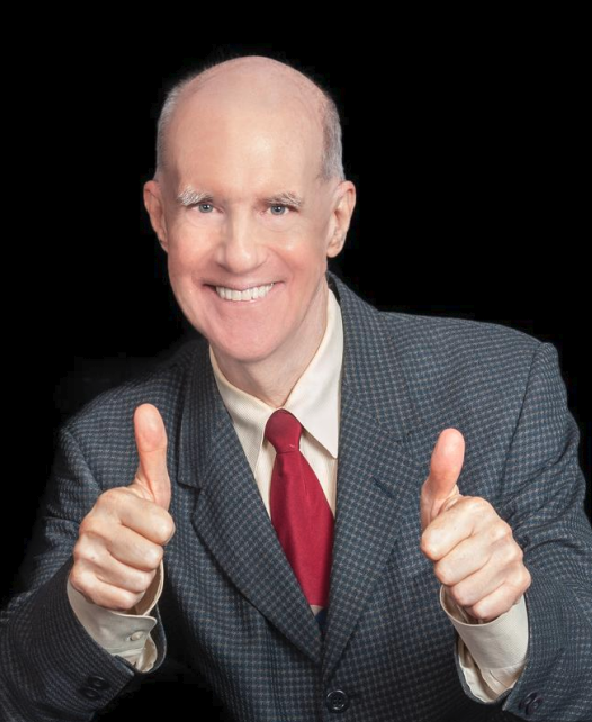
CEO
Mark Emerson is the author, inventor and teacher of AlgebraVictory, and the co-founder and CEO of Educational Empowerment Corporation. Math education is a multi-generational disaster. Mark's life mission is to fix this massive problem, but he needs help from a lot of people. There are seven ways people can help.