Apple Podcasts
 Spotify
 Castbox
 Goodpods
 JioSaavn
 Overcast
 Anghami
 Fountain
 Gaana
Gaana PlayerFM
 Rumble
 YouTube
 RSS Feed






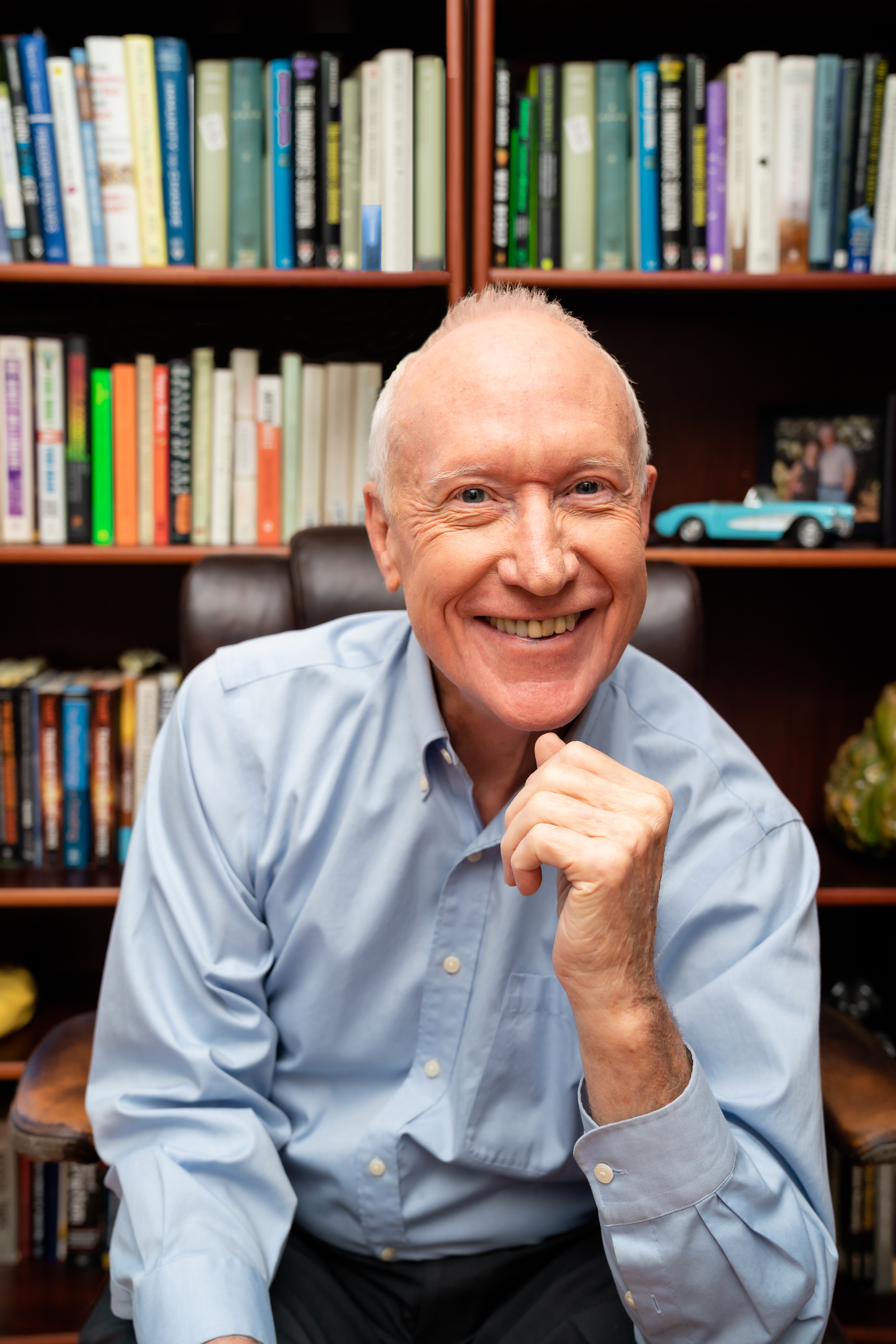
Discover the power of respecting people's beliefs and understanding money with a unique romantic and philosophical dialogue in A Private Conversation with Money.Richard Friesen is a former broker for Merrill Lynch, trader at the Chicago Mercantile Exchange, and owner of a trading firm on the Pacific Exchange. He has a background in psychology and is the author of A Private Conversation with Money, exploring the psychological drivers of the intense political divide.
This podcast uses the following third-party services for analysis:
Chartable - https://chartable.com/privacy
Podcorn - https://podcorn.com/privacy
Welcome back to the Purple political podcast. I'm your host, Radell Lewis, and we are back at episode number 15, as today we're gonna be talking about the nature of politics, political discord, and the kind of culture going around with the two dividing sides. And it should be a very interesting in depth conversation as always, just kind of start everything off. I'm gonna read off a review to kind of get some feedback. Whether it's negative, positive, I like to see what people are thinking. So this review says this is a solid podcast and bra be having some great points and topics. Keep doing your thing, play. Let's get it. Appreciate you. Good positivity right there. So with that said, we're going to dive into the discussion. I have my guest here, Richard. Is it pronounced Friesen? Friesen? Like freeze? All right, excellent. So I'm going to let you introduce yourself, tell you them what you're about and all that good stuff. So go ahead. Hi. I'm really glad to be here. I've listened to a couple of your podcasts and how you handle the issues that are really challenging. And so I just appreciate you as an interviewer and I'm really excited about being here today. So my background is from the financial markets. I was a broker for Merrill Lynch. I went to the floor of the Chicago Mercantile Exchange, was one of the traders at Yelling and Screaming. I worked for a large Arbitrage firm firm, and eventually I opened my own trading firm on the floor of the Pacific Exchange in San Francisco. But before that, my education is as in psychology, and I was a group and family therapist for a while. And after the exchanges started closing the floors, I sold my trading firm and went back to my roots. And that came a lot about that. Discovering a lot of the psychology around money and trading is in our heads, and a lot of it makes a difference. So with that and dealing with money a lot, I found that a lot of my clients had hidden and subconscious beliefs around money, meaning and success. So I wrote the book called A Private Conversation with Money. And that is especially challenging because, as you pointed out earlier, is the cultural divide around economics, politics and money. And that's what we're going to talk about a bit today. And I'm really looking forward to interacting and seeing what comes up. All right, excellent. Yeah, very interesting discussion as well. I've had discussion multiple times in regards to political discourse and how I think it's for the most part, very toxic, very negative as of right now. And it's on both sides. Both sides get the blame for me, whether you're conservative, liberal, Republican, Democrat, it really doesn't matter, especially when you get to the far right, far left extremes. You guys, for the most part have two sides of the same coin, if we really think about it. So there's a couple of questions that we'll dive into and that can bring up very interesting talking points. First was what are the psychological drivers of the intense political divine, in your opinion? Well, you certainly asked the big questions. So what we find out is that as we move into our culture, there's a number of things, and in fact, I even made a list of them. So what we have is concentration of political power. We have our tribal affiliations, we have the filters that we'll use to see the world through. News has shifted from the kind of BBC stating the facts to news that is meant to emotionally charge up the different tribes. And then we have how contagion can spread in our culture through social media. So those are the kind of major topics that I think are kind of coalescing to really force a lot of significant divisions and beliefs and emotional contagion and just the difficulty a lot of people have with relatives and friends and people at work who have a different point of view. It turns out it's not just a different point of view, but people really drop down into their fear centers and their emotional centers, which then exacerbates the problem. All right, so what I want you to do now can you restate these things in like a bullet point format real quick? And then I want to dive into each of them individually. Sure. Power, tribes, filters, news and social media. All right, so in your opinion, do you think they all share equal in terms of impact on the divide or do you believe that there's one bigger than the other, kind of like a ranking order? Oh my gosh, if I had to rank it, I'd look at something that's more underlying and that's our philosophic cultural divide. Even though most people aren't philosophically inclined. We have two very different cultural systems. One cultural system is outcome based on the left, we're looking at social justice and outcomes and inequalities. And the other one is more process based. It's what do you do, what do you do as an individual? What process do you put in place? And so we look on terms of what we're doing that produces an outcome, but the emphasis is on the process rather than on the outcome. So those are probably one of the core divides in our culture that then comes up and that we can see it in how the news shows things, how the social media exacerbates things. So I'd say that's one of the critical factors is are we process oriented or outcome oriented? And those two things are like oil and water. They don't mix. Okay. All right, so it seems like two kind of important things that I notice is one is innately endowed in human nature in terms of how people are in general. And it's really hard to overturn human nature for the most part, especially when. It comes down to what you've noticed. Yeah, 100%. But what you can do is either inflame those parts of human nature or mitigate them. And two of the things that you mentioned latter was media. Social media are things that are human made that for the most part, as of right now, mostly inflame those negative components. So when it comes down to media, I want to start with that one. A lot of people say that the news is like bias, and they showcase certain things that create a very toxic culture. Can you dive into your outlook of media and what exactly it does to kind of inflame this political discourse or political toxic discourse? Sure. If you have or shown a video of black people beating up white people, you can say, oh, that's just a few examples. But what it does is it goes down to the emotional. Or you have white people treating black people badly. Man, the humanness in us, the part that really cares gets really upset. So each side is inflaming it by showing just a few things that are just extremes. For example, you look at the conservative news, it will show you the extreme wokism and the craziest people in the extreme wokism. And then you think, oh, my gosh, that's what the other side is like. And the left leaning news will do the other things. Conspiracy theorists, people on the wackiest, on the most tippy top, they'll blow those up and say, oh, here's what the other side is like. So what we do is we have these emotional filters. And I got to admit, I do it too. I see a piece of news or a piece of information that kind of emotionally, I support. I'll open it up, I'll see something I don't, and I won't even look at it. So we all have our biases. We all have our filters. And so the question then is and Ridell, you've just hit the deepest issue there is, and that's our human nature, that somehow we think we can change a system without changing human nature. And that's really the challenge for each of us. If we can say, here is the human nature. Here are my biases. Here's how we humans operate. Can I operate at a higher level? But that's asking a lot, and I think that that's the next evolution in mankind, to be able to operate at that higher level. But right now, I'm stuck with it. I'm stuck with my own primitive brain functions that just filter for the information I want, expand my biases. So I'm aware of it. I'm working on it, but boy, it is still there. Yeah, I definitely understand what you're saying. And when it comes to the media, specifically the news, as you said, there's kind of two things that I really pay attention to. First thing is a event, like a political event, that will trigger a political discourse, whether it's something like a mass shooting, whether it's something like trump saying something dumb, whether it's something like police shooting black person, each of one of these things are a political event and that will always trigger political discourse constantly. So that's one aspect or political animosity, I think you're being kind to say discourse. Yeah, true, very true. Very true. And then the other part of media is the personalities behind certain talking points, right? You got your Fox News and what's his name, tucker Carlson, for example, right. So you have those people who have obvious political bias towards everything that they're about to spew out to people and people will either be attracted to their personality or just kind of like, all right, I'm listening to them and now I'm starting to believe them because I see them every single time. So there's two prongs to this. In terms of the reactionary, I say this event and I react. It's really hard to do anything about that because the media knows that I'm going to put this event out because people are going to watch it. I'm going to make money. That's just capitalism. It's really hard to do anything about that. But in terms of the people who are getting infatuated by these political personalities that are obviously biased and trying to convince people their way of thinking, how do you think people should handle or how do you think people should look at these personalities when they're watching them on the TV screen? And for the most part I would say not even kind of referencing like social media as of yet. For the most part, this is something that I would say the prior and older generation is affected with more so than this newer generation. This newer generation social media is their kind of crux right now. Yeah, well, I'm going to go back to when I built a trading firm and I looked at the news, not as truth because especially the media headlines on any event are almost always wrong, they're almost always biased. But what the information they carried that was important is how will this affect other people? What will they believe? Once I can guess is say, okay, then people are going to believe this. Then if they believe that, what are they going to do? How is that going to affect the financial markets? So one of the ways I made money is by watching the news, what will people believe? How will this change their minds and how will they behave financially? So now where we can look at the news, we can look at Taka Carlson or Rachel Maddow and we can say how will they affect and impact their true believers? How will they react? But what we're doing now is we're removing ourselves from the direct emotional impact, but we're saying that this is a story they're putting out and people are going to react emotionally. I, at a higher level, can look at that and see what they're trying to do and see the impact and start to understand how people are going to react. So it's an analysis more from our rational brain and appreciating what you've just said about the biases that the news is now entertainment aimed at our emotional centers. So once we do that, then we can remove ourselves from those direct emotional responses. All right, that definitely makes sense to me. I do think that people should be somewhat rational, but like you said, it'll be tough because they're purposely doing these things to attack your emotional situation. And for the most part, it really affects people in certain kind of areas, more so than others, where they won't even consider rationality initially when they see what's going on. Do you believe that media has to change or the people viewing has to change in this situation? You ask the hard questions, but the right hard questions. So what I see culturally is a breakdown of the normal guardrails. Wall Street Journal just put out a poll. I might even have it right here. Yeah, and it was in yesterday's paper. And we have patriotism has dropped from 70% to 38, religion from 62% to 39%, having children from 59 to 30, community involvement for 47% to 27%. But the one thing that's increased is interest in money from 31% to 43%. So if we see this as from a conservative, would say, break down into chaos. But if we just look at it objectively, we can see that civil institutions, religion, for example, provides a guideline, a vision. Man is sinful. Here's what we're trying to attain. So that has gone down. The Rotary Club is a civil institution that has done a lot of good in the world, but fewer and fewer people are joining those types of organizations. So if we look at the changes in marriage, single parenting, if we look at the processes or the outcome driven and the interest in money I wrote a book, A Private Conversation with Money, but what I see is an interest in money in and of itself. And I think it might be a replacement for all those other things that people are missing spiritually. So if we're looking at the nature of man and what you pointed out was so important, that's hard to change. So I grew up religious. My dad was an evangelical preacher. I'm no longer religious in that sense. But it almost feels like and I've been fighting this, I don't want to believe it. We need a religious revival that touches people at their deepest places to aspire to be better. It's a very interesting sentiment in regards to kind of having a core value. And I do agree because I'm not really religious either for the most part, but I always stay in this kind of middle ground. That's why I kind of consider myself agnostic because I don't want to disprove. I have no interest in disproving your religion, nor do I want to say I completely believe in it, right? Because I do think it's a valuable asset for certain people to kind of keep on living and finding meaning in life, right? So for me specifically, the way I replace it is I find logical values that inherently give purpose to my specific life. Now I don't think that's something everybody could do because they need that higher kind of overreaching eye on their shoulder for the most part. Over their shoulder for the most part. So it's hard to really kind of conceptualize how to live your life without having that overarching principle. With that said, in terms of media, I will say kind of before we kind of dive into the negatives of it, the positives of social media and the Internet is it's starting to hold these media corporations in check and to kind of go inside with your sentiment of people wanting more money. Nowadays they are able to become content creators, social media content creators. They can now do their own political research. They can now be their own version of Tucker Carlson without listening to everything he says. But I'm going to find my own truth and facts and look it up myself. So there's a much more incentive for people to do their own research, to look up this information, to be more educated as an individual due to financial potential gain from being a potential content creator. There's a lot of political content creators nowadays, or people who try to be political content creators nowadays in this newer generation. So these corporations who have a strong hand in what is going on in the media don't have as much or any influence on these individual entrepreneurs who are trying to find their own path and doing their own research. So that's a kind of caveat and moving forward because that's why I said in terms of media, it mostly affects like people from the older generation moving forward continuously. The internet will be getting stronger, social media will get stronger and people will look less and less to the media for their news. Now people look on Twitter, on Facebook or on YouTube for their news. So with all those positive that I just iterated, I do think there is negatives as well. So what do you believe those negatives are for social media in terms of the political culture? Yeah. Well, people doing their own research is almost impossible. Were you going to research climate change and understand it or are you going to research the complexities of the economy? And most people will just research for their bias and I'm guilty of this as everybody. So I'm not sure that doing your own research, but what you pointed out there are people with multiple points of view. So on Twitter I get a broad range of people and I can see a comment and then I can go down and see all the people who object to that or have a different point of view. So it makes it available. And that's the real positive, the negative. And the challenge is that because on social media, we're not like you and I are face to face. Am I going to say something nasty about you? No, I'm looking at you. I've heard some of your prior podcasts. I like you. I'm not going to say something mean about you on Twitter. You say something that I disagree with. Oh, that stupid guy. What are you, an idiot? Yeah, true. Very true. So the social media just has all caps or just has the text, and it misses that personal connection where we have and another thing, we've lost social graces. Oh, my God. When I grew up, I'm going on 76 in a month. Oh my gosh. There was also a social decorum that seems to be missing. So the social media, the positives are I get to see people from all points of view, not just the commercial media that is there to make money by selling ads, by telling everybody their base, what they want to hear. So I'm getting a lot more diverse opinions, but also I'm seeing just a lot of conflict and name calling without and we've lost respect and civil discourse. Yeah, I definitely agree to what you're saying in regards to the inability to have civil discourse to a certain extent. That's just one of those situations. From what I've learned in terms of human progression, societal progression is that we're going to continuously progress and better human life on totality. But there are underlying problems that we won't know until it happens. And when it comes to social media and technology, that problem is now that everybody can meet each other, nobody wants to meet each other. It's really hard to find a proper solution for that. I don't think taking social media away it would be a solution or even putting any kind of caps on it or laws against it. But I do think education, this is where they step in, especially teaching kids and parents, too, education and parents in terms of teaching kids, okay, you are social media, but this is how to be a person. So you have to find a good balance of social media etiquette, civil etiquette, and finding the balance on how to kind of do both. And that's something that needs to be more essential on both the parent side and it should be. Because now this current generation, we grew up with social media, so now we know how it works for me, for my friends. We've talked about it. It's like, yeah, I'm not going to let my kid on social media. I'm not going to let my way until they're a certain age. I don't want them on TikTok all day. Now we know the negatives to it. So moving forward, we could teach our kids this. And in terms of institutions, I do think they should have. If you're teaching kids how to be adults. You should teach kids how to handle social media because that's literally intertwined with our current life nowadays. So that's what I believe moving forward, how society should go. Regarding that in terms of the point of research and doing your own research, I do agree very much so that some people, when they have a certain opinion, they will look for facts that only endorse their opinion for 100%. I probably would say most people do that 100%, but the very least, like you said earlier, they have access to that information so they won't have to listen to it from a person like a Tucker Carlson. So they can at the very least have all the context behind the situation. And hopefully people are not quick to kind of see a headline on social media now. People will have the incentive to click on that headline, read the news article and then read the sources, attach that news article to see if what they're saying is not. Many headlines. If you read what's actually below them or the source, they're sometimes even the opposite of the headline. Yeah, exactly. That's again from our earlier point, they want to trigger you. They want to get an emotional response. They want you to click on it, and then that will help their revenue stream and all that stuff. Right. So it's a tough situation, but I do think there's ways around it. As for the people currently on social media, I don't know a lot of those toxic people who are just negative on social media. I mean, they just got to get a life. I really can't help those people. Yes, indeed. One of the things I ask my clients is if they're steamed up about something is to come to me next week and articulate the opposite side of their belief. Whoa, is that hard? They'll set up a straw man. They'll set up a really stupid example if a client who just hates libertarians. So I said, well, we shouldn't have stop signs. Stop signs are stupid, so we set up a straw man. But to really grasp that issue from the, you know, from a quality art, provide a quality argument for the other side. And once you can do that, what it does is it gives you a higher level ability to look at an issue from a number of points of view. But that's really a challenge. Yeah, I would agree. I do that on my podcast, too. I always ask, can you give an argument or can you give a positive and negative for said position that they're vouching for? Because that gives me insight on either their bias or the willingness to really care about the importance of the thing that they're talking about. You just did that to me. You said what are the positives, what are the negatives? And I think you're right. I think that's really an important skill to develop and that you're doing it on this podcast I think is just wonderful. I agree very much. So another interesting question I saw here is how can we invite people from all the belief systems to more rapport with each other? So this definitely goes into some of the topics we were discussing. Yeah, I told you I grew up religious, my dad was an evangelical preacher. I'm no longer any kind of a structured religion. But there's a phrase that just touches my heart and it doesn't make sense to me. It's totally irrational, but the phrase is, everyone is a child of God. Whoa. If I start with that premise and start with that, that person has a positive intention. Then when I come from that framework, from that ground of being, even on a subconscious level, the other person will feel respected. Then we can go to language. I teach language. My current model is my current way of thinking. Let me tell you about an personal experience I had that kind of evolved into this thought. I've had a number of beliefs through my years and at one point I was close to you and what you believed and here's what made the difference for me. So there's language we can use that share our personal experience but do it in a way. This is my current model. I just had a group on today and a new woman was there and she said, I'm an evangelical, I believe in God, these things won't go away. This is my belief. But she was able to do that in a way that nobody else in the group felt threatened. Even there was a guy there who was fairly anti religion because she expressed it and says, no, this is just it. And I believe that everyone is worthwhile, everyone is worth listening to and I respect everybody and I still have my belief. So what she did was she identified her belief and then also identified respect for other people. So depending on your personality and how you like to communicate, there's lots of ways you can do that. Like for example, somebody said something to me the other day politically and I went, Well, I was going to just blast them. And so instead of that, I said what you said. I got a strong emotional reaction, my stomach got tight and all of a sudden I felt a little threatened. Oh, that's really interesting, thank you for doing that. So I could see how emotionally attached I am to a belief. So thank you for that and just leave it at that. So again, there's lots of ways to communicate. Transparency is one allowing the person to see our experiences. What brings us to us, language says, this is my current way of thinking. All those things reflect a deeper respect for others. And I think that that is probably the most powerful foundation is that respect. And it shows up in all sorts of different ways we communicate. For the most part, I very much agree. Respect is very important. Transparency as well, in terms of talking to individuals, really just letting know your position. And like you said, I know it can be very difficult when you hear something that may trigger you for many of people, you're maybe a liberal and then you hear someone say, abortions should get illegal, and then you get triggered, right? You hear someone you're a conservative and you hear someone say, ban all guns. And then you get triggered, right? At the end of the day, there's no progression, there's no resolution in getting triggered and having a yellow match. For the most part, when you really get down to the nitty gritty, all these people who have these opinions come from some come from innate cultural, emotional place, from how they're raised. But once you talk about it, hear the different viewpoints, hear the different facts, you can convince like 10% of the people, but at the very least, you could find a borderline amount of respect if you both kind of talk it out. You don't have to agree to everybody. You don't have to agree with everyone, but you can respect them. I don't think that for anybody should be like a difficult thing to do at all. For the most part. I wish it weren't difficult. If I look at the political triangle and I look at the left that tend to be Democrats, the right tend to be Republicans, and the libertarians at the top of the triangle, there's very different political philosophies that what you mentioned is important. Your character, your personality, how you were brought up that are very deeply ingrained. And a lot of them will never come together. They just won't. They're the deepest philosophic beliefs. They're just incompatible. What I see working is a dynamic. For example, I have a picture of it, you know, a triangle, libertarians, left, right. And America then floats around like a ball between the left, the right. And we started out more libertarian that has been digressing more and more toward power from the left, power from the right. But we have this ball, and it's that dynamic tension. It's not right or wrong, but if you look at the left, the civil rights movement, emancipation for the slaves, the concern for the environment, you look at women's suffrage, unions when people in the factories were treated like cogs in a machine, you look at the progressives in that context, that ball moved over there inappropriately. If we look at internalizing our behaviors, their biggest filter on life is chaos and order. How can we create internal order? Get people to behave themselves, take responsibility for themselves, civil institutions, not government. If we look at the libertarians, it's personal freedom versus constraint. Each of those in the right context adds a lot of value. So this kind of America kind of moves back and forth between them, but all of them provide value. And if we. Can look at that from that point of view that in a context each provides a different value, then we can say in this context, does this philosophy provide value or not? All right, yeah, very much agree to this. So I want to go through the next one question that you have here. How does our culture impact our rapport with money? I think this will be very interesting because we spoke about money earlier and now being a current huge incentive with this current generation of people. So I'd like to hear your opinion on this. Yeah, well, I just have a book out, private conversation with Money and it takes an anti money, anti capitalist character, Joe, who then has a conversation with a character money. And so it's kind of a socratic dialogue along with a little bit of romance and struggle. And what we do is we look at money from the current cultural anti money one pie model if you have it. I don't social justice, fairness, outcome. And from that point of view, people with good hearts who care, who want the best for everybody, have internalized a lot of belief systems around money that keep them from the growth, the financial future that they want. So what I do is I reframe money. There's an economist, I just dropped his name. It'll come to me and he's a black economist. He's passed now, but I was listening to the radio about 20 years ago and he said, money is a certificate of appreciation. I thought, oh, wow. So Radell, if you do something for me, I give you not money, I give you a certificate of appreciation and you say, oh, thank you for that appreciation. So if we think of money as a certificate of appreciation, then what we can do is look to gather certificates of appreciation and give certificates of appreciation to those who deliver us value. So that is the major reframe in the book is how do we reframe money rather than looking at it as a thing of redistribution? What if we internalize? What if in fact, Ridell, what if everybody tomorrow morning in the world woke up and said, how can I deliver more value to my family, my kids, my parents, my community, my church, my employer, my employees, my clients? How can I deliver more value? What if everyone woke up with that tomorrow? Would money even be an issue? My gosh, there would be so much creativity, there would be so much value delivered that our lives would be enriched. I find this interesting. One thing that really steps out of my mind and kind of like the other kind of perspective of this is what do you say to the people who look at certain characters that utilize money in a very dirty negative way? You got the corrupt people, businessmen on top that people are going to scorn. You got people using money for very dirty sexual things, whether it's the strip club, for example. So when people see this, it will automatically give them a negative outlook of money considering how it's being used in these situations. So how would you talk to or how would you kind of pitch this type of ideology to them when they have this outlook? Sure. Money is the root of all evil. In the Bible, parents, some parents were so tight and said you'll never make money. The bad guys are out there, money is tight. Some people culturally class systems, all these messages that we get and then we get the issues that really we've created beliefs about that, that there are some people who use money badly. Again, Ridell, coming back to what you said originally, it's about human nature. We're flawed as human beings. So as we're flawed as human beings, the way we deal with money is also going to be flawed. However, my guess is of all the monetary transactions in the world, 95% of them are delivering value to us. There's people who are corrupt, people who use money badly, people who buy the yachts and the trophy, spouses and people who use it to dehumanize other people. They use the power, all power corrupts, be it political power or financial power. So yes, we have that. But that does not devalue the value that you and I can deliver to each other and receive certificates of appreciation. If money is forced from one person to another as forces used, then I call that bill of indictment. So if I force you to give me money for something, that's not a certificate of appreciation, that's a bill of indictment. So we can use our personal or our human defects to dehumanize or to castigate money. But I think that these human flaws are everywhere. So instead of that, let's look at money at a certificate of appreciation. And when people do bad things, let's look at that as part of our human flaws and bad people, but not poison the well of money as a certificate of appreciation because once we do that, then we internalize conflicts around money, success and meaning for our lives. I definitely think this is a very interesting, strong message to kind of push out. I do think that some people will take away from the message very strongly. Unfortunately, I do know for a fact that other people won't buy the message at all and kind of be more interested in those more negative uses of money that we iterated earlier. But kind of looking at it how you looked at it, it definitely has very interesting outlook, very similar to me in terms of like I don't have this innate want and craving for money. For the most part I realize the importance of money and I'm obviously going to get money. But for the most part my core values are centered around other things. So if you frame money in the way that you framed it earlier, it could give that people a certain value that they don't have earlier that I was mentioned prior, when they don't have religion, for example, or when they're not sure what to do with their life. Because even if you have a lot of money, we know for a fact that does not bring you happiness. You hurry up all the time. Money does not buy you happiness. And you hear all these celebrities either going broke or all these very rich people either going broke, committing suicide, or just being plainly unhappy. So it doesn't bring any value to your happiness. It can help you find it, but it won't give you that value innately. So I do think that's an interesting sentiment to point out for sure. Well, if we're replacing our civil institutions and the interest in money is going up, it's what I call a hole in the heart. So if I have a hole in the heart about my identity, my worthiness, my place on the earth, my God, if I can make some money, I can prove I'm somebody, I can show them I can buy all sorts of things to prove I'm somebody. So if we're trying to use money, and I think this is what you're pointing out that's so important to fill that hole in the heart, celebrities just who blow money. We see football players, basketball players, baseball players who've made tens of millions of dollars in their career, don't have enough money to retire because they don't have that relationship with money and the value they've delivered, but they drop down to all belief systems about their identity and who they are. So if we go really deep, then we can find our worthiness and discover and open the door to delivering value to others. Not only do we get compensated with certificates of appreciation, but the deepest part of us can feel like we've delivered value to our community. All right, so we got the final question here. How do you reframe the major political philosophies? Yeah, if I look at the right, their biggest fear is chaos and they want to legislate order. If I look at the left, their biggest fear is inequality of outcomes. And so as a result, their solution is social justice. If I look at the libertarians, their biggest fear is personal constraint. And so they want the reduction of both the left and the right interfering in their lives. And each of those has a positive contribution in the right context, like we talked about earlier. So really it's about what is their contribution, what is the context, and is that appropriate. That's interesting. I do think it will help people when you're speaking to any of the three philosophies that we mentioned, that you try to find out what exactly is the purpose of your philosophy for you? Because there are people that claim the title of liberal claim the title conservative, maybe libertarian that are just having the title because they think this is the right side to be on versus having the title because you innately believe in the philosophies of the political ideology at the end of the day because they do all have value in keeping order for the United States. We do need a left and right, all that stuff. And for the most part, most people are in the middle anyway. It's just we see the crazy rights and then we see the crazy left, and that does not look good if we move too far on either side. So once you try to find out if they have that core philosophy, then you're able to really speak on, okay, how do we either come to common ground and compromise or whether or not you could find that there's a certain discrepancy on what you're saying versus the ideology itself. So I do think that's a strong way to kind of tackle these discussions, this discourse on either of the three individuals. If you encounter them, what do you think? Yeah. So if you can say what are your greatest fears? What would happen if the other side took over? What would happen to you? What were you afraid of? And if you can have that kind of empathy and see now their belief system, for example, if you ask Republicans what the Democrats believe about XYZ, and then you ask the Democrats what the Democrats believe about XYZ, it's totally different. In other words, our perceptions and what you just said is so important. Most of us just want to live good, honest lives somewhere in the middle. We have a proclivity for social justice or order or freedom, but most of us just want to live our lives with people that we enjoy and love and that are decent and caring people. So if we look at most of the people in the world and we look at it from that, I think we can find some common ground in that. If I say, oh, I'm a conservative, or I'm a liberal and we identify that, what if we could say, well, my current beliefs tend to be more liberal, my current beliefs tend to be more conservative, or emotionally, I'm a libertarian, so I have a phrase called our emotional beliefs. So if we identify them as emotional beliefs when we're talking, rather than, I'm a liberal, oh, my emotional belief is more liberal, all of a sudden that opens things up. Yeah, exactly. So, yeah, I think that is a very smart way to approach things moving forward. And I do think you can kind of get the core of the issue better that way in these discussions. So we're going to wrap things up. Do you have any final words that you would like to say to the people? Sure, if they want to learn more. I'm working on a book called Healing the Political Divide, and it'll bring up much of the things we have here. You can always also, if you're interested in conversations with Money, conversations with Money, or Conversations Money Purple, I've set up a web page just for your listeners, and they can go there and get a free online course, which deals with money, but also a lot of the issues we were talking about today. So, in conclusion, I'd say kindness is one of the most powerful things we can all contribute. All right, excellent. So I hope everybody enjoyed today's episode. As always, leave a review so you can get shouted out and future podcast episodes rated five stars spotify and Apple, of course. Check out all the social medias, all that good stuff. Hope you guys enjoyed the episode. You all have a good one. Take care and peace. Bye. Radio I really appreciate