 Apple Podcasts
 Spotify
 Castbox
 Goodpods
 JioSaavn
 Overcast
 Anghami
 Fountain
 Gaana
Gaana PlayerFM
 Rumble
 YouTube
 RSS Feed






In a world of biased media, 1440 Media strives to provide unbiased news and comprehensive political coverage. But when allegations of spreading false information and defaming their company arise, will they be able to maintain their commitment to truth and integrity? Find out in this gripping episode of Purple Political Breakdown, where host Radell Lewis interviews Tim Huelskamp, leaving us on the edge of our seats, wondering how this clash between facts and accusations will unfold.
In this episode, you will be able to:
- Recognize the significant impact media has on our political perceptions.
- Understand the true need for unbiased news in cultivating informed citizens.
- Get a glimpse into the meticulous vetting process that ensures trustworthy news.
- Develop an eye for discerning facts from opinions in news reports.
- Discover how newsletters can seamlessly fit into your daily routine, providing compact yet comprehensive news updates.
My special guest is Tim Huelskamp
Tim Huelskamp's tenure as CEO of 1440 Media has seen him redefine the role of media in politics. Breaking away from the tradition of biased reporting, his focus is on providing readers with an impartial perspective on national and global issues. Formerly a finance professional, Tim made the transition to the media industry driven by a keen sense of responsibility towards ensuring factual news dissemination. His dedication has led 1440 Media to develop an impressive following of 2.6 million Americans, all benefiting from their comprehensive and unbiased coverage.
The resources mentioned in this episode are:
- Join Pod Match through my affiliate link in the description to sign up and get matched with other podcast hosts and guests.
- Sign up for Podpage using my affiliate link in the description to create a customizable podcast website with ease.
- Subscribe to 1440's newsletter to receive comprehensive and impartial news without bias or opinions.
- Check out the bias maps and heat maps available to identify sources with factual information and avoid sources with bias.
- Engage with the editorial process of 1440, where a team reads multiple articles on a topic to compile factual information and filter out opinions.
- Explore opinion pieces for different perspectives, but rely on 1440 for unbiased news and information.
- Follow 1440 on social media for daily updates and additional content.
- Support 1440's mission of delivering news without motives by sharing their content with others.
- Stay informed about political topics by reading the Purple Political Breakdown podcast and subscribing to their newsletter.
Join Podpage: https://www.podpage.com/?via=radell
Join Podmatch: https://www.joinpodmatch.com/purplepoliticalbreakdown
Discord Link: https://discord.gg/9CkSzt77dg
This podcast uses the following third-party services for analysis:
Chartable - https://chartable.com/privacy
Podcorn - https://podcorn.com/privacy
00:00:00 Welcome to the Purple Political Breakdown. If you're gonna run a 60 Minutes TV show where people are yelling at each other and you kind of tell people what they want to hear, that's actually like a really good economic model, right? So so that's kind of what we're, like against, like, the but however, like, what we think is like, we're just trying to be really efficient with people's Times and Time. Excuse me. And it's gotten maybe not so bad, but that infotainment and the opinions, the bias and the tuning in and everyone yelling at each other and your heart you should see these emails are received like the heart and your heart race, your heart's racing and your blood pressure is up. 00:00:39 We just feel like it kind of went too far one direction. And now we're just going back to being like, tell me what happened. Keep it calm, keep it factual. Are you enjoying today's podcast episode? I really hope you do. 00:00:53 And I really hope you enjoy the fact that I have an amazing guest talking with me and having this great discussion. If you as an individual personally have your own podcast and maybe you want to have great guests on your podcast as well, well, I got a deal for you. In my description, there is a link to something called Pod Match. Make sure to join that link through my affiliate link so you can sign up to get matched up with other podcast hosts and podcast guests. So you make sure you are never missing an episode without a productive guest to have an amazing conversation with. 00:01:31 Pod Match is similar to any other kind of matching site for the most. Part, and it's super easy. You just $6 a month and you can have a guest for each and every podcast episode that is tailored to your specific topic. So again, join the link in my description and join Podmatch now. Do you want a great website like this? 00:01:55 This is my podcast website where I direct the audience to come to watch the content, listen to the content, read the blogs, and much, much more. If you want to have your own customizable podcast website, then join my affiliate link in my description to sign up for something called Podpage and they can help you customize an easy podcast website for your personal podcast. Sign up to get a discount. Now, again, use the link in my description to join Pod page now. Welcome back, ladies and gentlemen. 00:02:33 This is episode number 34 of The Purple Political Breakdown. And today we have a very interesting conversation with a great guest on as we talk about media, media and politics, their role in politics, and kind of the outlook of mainstream media versus kind of the new version of media that is paving its way out currently with generations now and the generations in the future. And to kind of initiate that conversation, I have a great guest Tim, and he's going to dive into his company, 1440 Media, what his company does, and very much engage in the conversation. Of course. Now, this is just me, your host, Radell Lewis. 00:03:15 My two co hosts are not here today, but they'll be here for future conversations, of course. Now, I guess the first things first. I'll be honest, Tim, when you reached out, I actually was using your service before you even reached out to me. So I was subscribed to the newsletter via email, and I would use your newsletter to kind of read some current news that's going on. I see that you guys cover a lot of different things with, like, you have the main topic, you have sports topic, science, politics. 00:03:49 Obviously, I dive into the politics a little bit more in depthly, of course, but it's kind of interesting how I was already absorbing the content, and then you reach out to me, so it makes this conversation a lot more interesting. Of course. So how are you doing today? How's your day been? Really good. 00:04:06 First of all, super honored to be here. Thank you so much for the opportunity. Riddell yeah, no problem. No problem. So I guess to start out with everybody that's not myself, can you explain not only who you are, but what the company is for the people? 00:04:21 Yeah, sure. Of course. So I'm Tim Hills Camp. I'm 1440 CEO, live out in Chicago at the moment. Yeah, so 1440 is a newsletter. 00:04:29 We send it out to about 2.6 million Americans at the moment, and we focus on delivering news without motives. So what that means is actually, maybe I can give you the founder story because I think it really goes into how we started this and why we built this. So I used to work in the venture capital private equity space, so I'm actually, like a finance person by trade. Did that for about a decade, helped invest in rapidly growing technology companies. And then my co founder, Drew is a PhD scientist. 00:04:57 He used to work on Capitol Hill. Believe it or not. One of his jobs was kind of like to read really sophisticated science documents and then distill them down for folks on Capitol Hill. So we were buds, and basically we had this problem, and we felt the media landscape wasn't delivering for us in two ways. One, we felt like we were really busy professionals and we didn't have a lot of Time, and we wanted to know what was going on in the world, but we didn't have Time to go to, like, 15 or 20 different newsletters or websites or podcasts or what have you, right? 00:05:23 So we think that news by design is very niche or verticalized. So you have sports and politics and all the things you just said. Right. Business. And by the Time you go around to all 15 or 20 of them to get a well rounded view of what's going on. 00:05:38 It just takes a really long Time. So we said, why can't there be someone who's like inch deep, mile wide in a world of inch wide, mile deep that just gives us everything in one place? If you only had a five or ten minutes in the morning to really know what's going on in the world, provide that. So that was number one and then two. And I think why I'm here is we felt that there are these news organizations we respect tremendously, but they often tell you who to vote for, how to interpret something, or what your opinion should be about the news story of the day. 00:06:06 So we basically said we're pretty smart people. We can come to our own conclusions, we can read documents, we can read insights and make our own decisions. But can someone just provide kind of a just the facts approach without all this opinions and bias and people yelling at each other and just like a safe environment where we can try to learn every day? So, yeah, kind of with that one two punch of we call it comprehensive and impartial, we set out and built 1440. It was about five years ago. 00:06:36 We did the whole for the startup enthusiasts, we did the whole minimum viable product process, unsure if anyone else would even care, right? So we sent it out to about 78 friends and family and just with Thesis, like, let's see if people like it and if there's anything there. And it just kind of continued to grow. I think it went from 78 the first day we're actually doing it weekly at the Time just to test the concept, went from 78 the first Time to 91 to 104. So there was like some small evidence that it was growing. 00:07:05 And we just took a ton of feedback from our users in the first couple of quarters. And now fast forward actually, like, a lot's happened since then, of course, but fast forward a couple of years later and we're up to 2.6 million Americans. We're really proud that the audience is about 50 50, male, female. It's spread almost perfectly across the United States as well. And it's about a third Democrat, a third Republican, and a third Independent. 00:07:28 So we think it speaks like the audience itself speaks to this, like there's this kind of a psychographic of users. Maybe they're not a demographic because they're all across all ages and occupations and political beliefs, but they're just hungry for can someone tell me what happened and let me come to my own conclusions? And that's who we serve. Yeah, I think that's a great mission, of course. And when I was searching, kind of go from my own experience so that people kind of understand how I start absorbing your content. 00:08:02 When I was approaching the political landscape and diving into these type of topics, considering how I present the podcast and considering how I present the content, one of the big things for me is really looking at topics, trying to find out solutions without political bias, without trying to kind of push an agenda or motive. I'm not really interested in the kind of mass attacks from both sides against each other and the skewed way the facts are presented. And we see that Time and Time again a lot of different ways to absorb information. We see it on TV, of course. We see it on certain podcasts. 00:08:40 We even see it on social media. So I was searching, okay, I need some information. And the convenience of getting that information daily in my email would also be grateful. So I'm like unbiased political newsletter and 40 40 was the first thing that kind of came up, and I was like, okay, great. Let me see what they got. 00:09:02 I looked into it, and I was like, okay, this looks good, and signed up. And for the most part, from what I've seen, every Time I read the newsletter, there was never a Time where I felt like they were trying to push me to think a certain way. So that's something I appreciate, and I'm sure the 2.6 million also appreciate, because a lot of people are just getting tired of this current landscape of trying to make them think a certain way. They want to get the facts presented to them. They want to read it, and they want to make up their own conclusion and their own opinion. 00:09:35 And it doesn't even have to be someone like me that rides the middle for the most part. But even Dems, even Republicans, left and right, even them, they're getting tired of getting kind of pushed to think a certain way. So to kind of help the people understand how you go about this approach. Because for some, it's so hard to kind of present information. I don't think it's that hard personally, but for some, it is to present information in a very nonpartisan way, non biased way. 00:10:08 How do you go about presenting that information? So you're making sure that you're presenting facts and you're allowing the audience to kind of come to their own conclusion? Yeah, absolutely. So there's a few ways we do this. Our editor can speak much more eloquently here, but I'll give it a shot here. 00:10:25 So, yeah, I think the first way is one knowing which sources tend to just deliver factual information and don't have bias and opinions. So there's actually a lot of new tools out there that do, like kind of bias maps and heat maps and kind of be careful of these sources. They're on both sides, the right and the left, and kind of be careful of them. So I think just after having done this for five years, we know which sources you just stay away from altogether, or if someone's reading one of them, or if my uncle sends me a link from a certain one, I'll tell him be careful with that. That's like misinformation, right? 00:11:00 So that happens quite a bit. And then I think it's really our editorial process. We have a terrific editorial team that's just reading multiple articles about one topic a day to try to find out one, so they can be really well informed. Right? They ask the deep questions. 00:11:16 They're learners themselves. They want to know what's going on, they want to learn about the topic. So they're going deep down the rabbit hole, if you will, and reading ten or whatever articles on the topic. So one, they can not only compile the information for themselves and our readers as well, but they can also be like, that's not the best article, that's all opinions. So I think it's a combination of knowing where to look and then just the really strict rigorous process on just trying to get rid of all of it. 00:11:45 Right. And we're not perfect, of course, and one of our taglines is we're as unbiased as humanly possible. We're trying our best here, but we are really trying very hard to just be like opinion, not here. And also we love opinions. There's some incredible opinion pieces every day that are written, but I think we think that those have snuck into too much of the news and the average consumer is just like, cool, man, can someone just tell me what happened? 00:12:14 Right. So, yeah, I think it's that. And then I think the last thing too is given my kind of like private equity, venture capital, investment banking background, I actually still help with our business section. I really enjoy writing that every day you can have facts, but then you can frame it and have motives in a certain way. So one of the examples I like to use, and I'm not going to get the numbers exactly right, but I believe it was in August of 2020, at some point in the depths of COVID right? 00:12:46 There was obviously huge layoffs in May and June and then a couple of months later there was like a huge hiring spree. And there's a couple of facts there, right? One, I believe it was August, but I could be wrong. I think it was something like seven or 8 million jobs were added in August, which is the highest amount of jobs ever added any single month. Right. 00:13:09 However, there still were something like ten or 11 million less jobs than at the start of the pandemic. Right. So you go on these sites and again, to your point about kind of like pandering to specific political beliefs, you go to certain sites and it's like we are in the best economy of all Time, which that's factual, right? If you define the best of our economy of all Time by the highest job growth ever, you could make that argument. Right, but then you go to the other site and they say, other sites say we're still 10 million jobs behind. 00:13:45 And it's the worst economy of all Time. And I think that's what happens a lot at these Thanksgiving dinners, right? It's like people get together and they're only hearing certain sides of the story and it's like we're in the best economy of all Time. What are you talking about? We're in the worst economy of all Time and people are just like speaking past each other. 00:14:02 So for us, what we try to do, and again, it's because we're just trying to learn this ourselves. If we were to write that tagline, it would be something like august 2020, unemployment drops from nine. Totally making up these numbers, I apologize 9.2% to 7.9%. Adding 8 million jobs, the highest ever in a month. However, the total job figure is still 10 million behind the beginning of COVID And that's the whole story, right? 00:14:31 That's what you want to learn. But we just find that people pick out what they want to they're part of it to beat their drum, essentially. Yeah, that's a great point. We see that Time and Time again. And like you said, it's so easy to kind of use factual information, like you said, but present them in a way to kind of push a specific narrative and to kind of paraphrase real quick. 00:14:59 Basically what Tim is saying here is that you can have someone present information about the job growth, the percentage of growth being so much larger, especially in condition to COVID. Obviously with that Time versus this Time, the percentage is going to be extremely huge. But in reality, when you compare that to different periods, the amount of jobs is not the same, it's less matter of fact. But they use that growth percentage number to kind of portray themselves as, oh yeah, we are doing an amazing job. The current President, the current Vice President, the current party that is controlling the Congress, they're all doing an amazing job and this is how we're doing it. 00:15:43 But in reality, they're just trying to get things to the status quo of everything, even before COVID So that's just an excellent point there. But I guess I'm going to go into this route because it's unfortunate. But as we've seen, and there's plenty of examples out there, as we've seen, information and facts can only appeal to so much people, the people like your editorial team, people like myself and my co host, we love information, we love learning, we love obtaining knowledge in a way so we are informed about a particular topic. But I would say the mass people out there would when they're absorbing information, they kind of skew the ratio of how they absorb information to majority enjoyment versus factual information being correct. So with people trying to get entertainment more so than anything. 00:16:40 That's why they can appeal to certain news outlets like Fox News or CNN in certain aspects. And they appeal to personalities more so than the information being presented, regardless of what they're saying. But since they like the personality, they're just going to assume that they're just giving them the correct information. The difference between 1414 media obviously being a newsletter and how you present information, you don't necessarily have a personality to the facts presented. How do you tackle that kind of it is an issue to an extent, but it's just the reality of humans and how they consume media. 00:17:20 How do you tackle that potential challenge to make sure you're not only presenting factual information, but also presenting information that will entertain the audience? Yeah, it's a wonderful question. I would say yeah, we call that like the infotainment that's a lot of folks call those specifically TV stuff. Yeah, I don't say to be fair, but it's interesting because a lot of folks in my friends and family network on both sides, on both the MSNBCs and the Fox, the one I watch to see how different the world is on a nightly basis. I don't watch it nightly, but when I tune in and yeah, it's interesting. 00:17:58 I think one of the issues there too is the person watching that wants to hear it, right? So it's like a self fulfilling prophecy. They believe a certain thing. They think the other team is evil. It happens on both sides. 00:18:12 They're both attacking the other team. You have a certain set of maybe political beliefs or fiscal beliefs and they tell you kind of what you want to hear. So you're going to keep watching that. We always use this stat where it's a ballpark figure, but if you basically look at how much a minute of your attention is worth, if you look at Facebook data and TV data and a bunch of things, it's worth about a penny a minute, right? So if you're watching something or looking at something or reading something basically worth like, the free market on your attention is a penny. 00:18:47 So if you're going to run a 60 Minutes TV show where people are yelling at each other and you kind of tell people what they want to hear, that's actually like a really good economic model. Right? So that's kind of what we're against. But however, what we think is we're just trying to be really efficient with people's Times and Time. Excuse me. 00:19:08 And it's gotten maybe not so bad, but the infotainment and the opinions, the bias and the tuning in and everyone yelling at each other and your heart you should see these emails are received like the heart and your heart race, your heart's racing and your blood pressure is up. We just feel like it kind of went too far one direction and now we're just going back to being like, tell me what happened, keep it calm, keep it factual. So, yeah, we worry about no company can capture the entire tan, like total adjustable market. But a lot of people on all sides, even like far left, far right, they're getting sick of this and they're just like, can someone just again, I know I've said this, can someone just tell me what happened? Right, so they're just so fed up with all this excess stuff going on and they're like, can someone just give it to me? 00:19:59 Basically how news was like 40 years ago, right? There were like three channels and they told you the facts. And we get a lot of Walter Cronkite emails like, oh, you guys are kind of like Walter Cronkite who just told us the facts and let us come to our own conclusions. Anyway, so, yeah, long winded way of saying I think we don't really worry about it because there's so many people out there in America that just want to know what's going on that we think our tam is plenty big, even if we don't include everyone. Yeah, that's definitely an interesting way to kind of attack this scenario. 00:20:32 Especially since you indicated that the way you present the information is extremely Time efficient, can grasp it really quickly, and some people, like you said already, are sitting down to focus on the yelling match or focus on some weird agenda that is about to be pushed. But if you can't capture that enthrallment of getting into that drama, basically, you can at the very least capture the fact that very quick, Time efficient wise, they can capture that information and move on with their day, of course. So that's a very interesting model and it makes sense, of course it makes sense to kind of go that route to an extent. Have you ever considered down the line presenting information in a more conversational basis where you have some people, maybe some personalities on your company present a more audio form or short form? You can still do short form. 00:21:35 Especially. It's very interesting with companies like TikTok and people like YouTube shorts or companies transitioning like YouTube to YouTube shorts and Instagram reels. That is another way people are starting to consume information. There's like this pretty big TikToker that people are loving, that even him and some others that I've seen when I scroll through the platform, where people are loving them because they're just presenting the facts. They're just presenting the information and they're doing it obviously in like one to two to three minute spurts. 00:22:09 It's not long. They say it very quickly and then move on. You just got a bit of information in like one to two minute span without drama, kind of filling the air. Now, the great thing with them, obviously, is they're inputting their personality into an extent. So because they're doing that, you're also entertained, but you're also attached to the personality. 00:22:33 So there may be danger. We can kind of discuss that a little bit, but have you ever thought about kind of approaching it in the future that way in terms of information? Especially since you already have the okay, quick model right here. Just need to translate that to a video format. Yeah, well, when we do, you're our first call, Rodell. 00:22:51 You got to help us with that. All right. Got you on the video. But yeah, we haven't done that today. Well, I will know. 00:22:57 We do social media. So we have a social media team that does snippets of news and stories. So we're on Instagram, Facebook, Twitter, LinkedIn, TikTok. We're working through some of that stuff and trying to think about how to scale the business. But to date, we basically said to ourselves, we think a lot of companies kind of do too many things. 00:23:19 And we've seen this happen a lot of Times. Business, they launch too many products, they have too many things they're working on. And then you have and I'm not talking about every company, but some companies, you have like, instead of one excellent world class product, you have twelve to 15 mediocre products that no one loves. And that's usually not a good for long term business. So we are thinking about new mediums and new ways to deliver our product. 00:23:42 But at the moment, it's just the newsletter. Fair enough, fair enough. It's just an interesting thing to think about, obviously. And I find 1440 and how they present information very efficient. But I guess it plays into kind of the United States kind of capitalist way, where back in the day you said like 40 years ago, you may see kind of companies, news outlets presenting the facts, presenting the information. 00:24:10 But I don't know if this is true. But based on my own interpretation on how it could have happened, is they realize that people may or may not actually care about the information, but if we make them attached to the personality that is presenting the information. We can kind of capture more audience and make them more dedicated to the content that's being presented. And in that, of course, they kind of get people to recognize his faces. Like a Tucker Carlson, for example. 00:24:43 They recognize faces. Like, there's a one CNN guy that got booted. I don't even know these guys names by heart because I don't even watch any of them. But you can see, people know these guys. They know their talking points and they know what they try to do on a consistent basis. 00:25:01 So they translate from, okay, we're going to present the facts to okay, we're going to present facts, but we care more about making money. So I guess that's the potential concern with those situations. But that model obviously worked for some of the bigger media companies and they put personalities out there. But it's interesting now because of how society is so politically divided as of right now that it's so heated and they're calling out people, people are getting fired like Tucker Carlson, and there's like a host on CNN that's getting fired as well. So you have these different situations. 00:25:41 So in your case, the reason why I'm bringing this up is if you were to kind of consider a circumstance where you kind of put a personality out there, how much does it weigh in terms of pros and cons when it comes down to potentially having a personality? Be too much of the personality versus the facts versus unless you can kind of create a way to do it where they don't get attached. If you were to go down that route, would that be like a major concern, especially if that personality became powerful enough to kind of sway opinions in the future? Is that something that you consider? Yeah, it's a great question. 00:26:26 I mean, frankly, we've considered it. It's just not in our DNA and it's not in the cards for us. That might be foolish, but we just feel like, again, that's saturated and overloaded and there's all sorts of different personalities and that's not who we are. That's not why we get up in the morning. That's not why we would ever win. 00:26:46 So just stay away from it altogether is kind of how we think about that. That's a fair approach. Fair approach. And I just thought of something a little bit, so I'm going to bring it up. It's considering the evolution of AI technology. 00:26:59 So another kind of aspect that people are going down is having AI even present information with how AI audio is kind of working. Matter of fact, that can even translate some people's voices. So has that ever crossed you and your company's mind in terms of having AI present information? Yeah, with any big technical shift. Right. 00:27:22 There's one of these every like ten or 15 years, the mainframe personal computer, the Internet. It was supposed to be crypto, but that never really happened. And now the next one is AI. Right. So we're evaluating this and checking it out. 00:27:37 I think it's going to have huge implications, like all tectonic shifts in tech do. What we found so far is the AI is really good at summarizing. If you use Chat GPT or any of these things like, hey, give me a summary of I'm in Chicago, like the history of Chicago. Right. It would come back and do that for you. 00:28:00 Really? Well, we found that it's not good at yet and obviously this is going to change because it's AI and these machine learning models are incredible. And I'm not a technology person. I just know how kind of it all comes together a little bit. And yeah, it's not great at saying like, here's 10,000 articles from today. 00:28:20 Which ones matter, which one should I read and which one should I avoid, basically. Right. And at the end of the day, that's what we do. We're a curator, so we look at all the articles, all the information, all the the what's going on in Ukraine, but then it's also like the companies that IPOed and new scientific developments. And then we even have a fun section on the bottom that does. 00:28:49 Michelin Star restaurants and fall foliage schedules and just like fun stuff to make you an interesting person. So anyway, what we found so far, and we're very early on this, but if you feed it everything on the Internet, it can't come back to you yet and say, this is what you should read, this is what you should consume, this is what you should know. We think humans are better at that right now. Again, right now, in case it's like, I have to watch this, like five years from now. And I'm like, wow, he was away wrong on that. 00:29:18 But right now it can't do that. But will it? In a couple of years, maybe even a couple of months, probably. So, yeah, we're constantly trying to figure out how we can use it both as a tool to help us stay smarter. And then that's the thing, because I know I keep saying this, but at the end of the day, we're just doing this for ourselves. 00:29:34 We're not like media people. We didn't come from the media. Right. We're just trying to get smart and be knowledgeable people. We're all intellectually curious, so we do it for ourselves. 00:29:44 And then now just 2.6 million of our friends read it every day. Right. So whatever tools we could have out there that would help us make that easier and help people learn more efficiently or help discover new amazing content, where do we sign? It would be incredible. But what we've found is it's still too early in the it's early, so I don't know. 00:30:07 It'll be interesting to see how people use it. There are some news organizations using it, which makes a lot of sense, like AP and some of the other companies for earnings reports. That's exactly what it should be used for. Right? So Microsoft does their earnings and they literally go in and they say, pull out the revenue number from the Q, one revenue number from the ten Q, and what was it the year before and what's the change? 00:30:33 And just write an article about did their revenue grow or not and did they miss earnings or not? That's something AI can do really easily. But we think that historically, when we've studied what happens in those environments, usually what happens is it allows really smart humans to their kind of monotonous Time of doing busy work goes away and it unlocks human creativity. Right. So we're actually really excited about it. 00:31:00 It'll be really cool to see what happens. It's definitely going to change a lot of, I think, with this one, like white collar jobs, too. So it'll be amazing. Some of the stuff, like in the law field, where they can take what used to take thousands of hours of associate Time reading documents and just throw it at a computer now and the answer can come out. It's pretty wild stuff, but I think yeah, it's just like still TBD, how it all plays out. 00:31:27 But that's sorry to just put about it. What we see is it's great at finding information, summarizing information. It doesn't have the skill of a human yet in terms of this is what you should read, or this is why you should read that, but it's definitely coming at some point. Okay, funny thing you say that is I actually did a podcast episode with a company that is trying to achieve that. I don't know if you heard of them, but they're called otherWeb and they're the ones that they're trying to achieve an AI model that can kind of rationalize good information versus bad information and present only factual correct information to the people. 00:32:08 So I'll tell you more about that later if you're interested. 00:32:14 So to kind of go over kind of the topic of discussion a little bit more. So when it comes down to media, especially as of recently, probably ever since Donald Trump moving forward, the role of media and its role in politics has definitely been, I guess, interesting. If you want to say good or bad, I'm willing to argue, especially with the companies that we've talked about where they're kind of framing things in a certain way. It has been bad for certain people, but the other side would argue it's good for my side, though. So it seems like media, especially the big media juggernauts, have an active role in perpetuating thought and opinion about political issues and political actors, basically, whether it's a congressman or presidential candidate. 00:33:11 So what do you believe the role of a media informational company like yourself or other companies you could think of? What do you think their role should be when it comes down to politics and how does your company kind of handle or go about presenting information and then their role in politics? Yeah, great question. I think the way we think about that is other organizations have different motives and different ways they do business. Like to use my penny a minute example from earlier. 00:33:53 If that's the case, and you want people staring at screens longer to maximize revenue, it makes sense to me. And I think to a lot of people that you would say things are a little out there to get a reaction and tell people what they want to hear and then have people from different sides, basically, in a verbal boxing match. Right? A lot of that stuff's very interesting and it sucks people in. 00:34:27 We're not in that business and we don't really understand it. We don't come from it. But we just know that a lot of people don't want that anymore. And they want bite size tidbits of information where they can learn more and they can go down when they go down a rabbit hole, they know it's like a pure learning environment. And not everything I just said political verbal boxing matches and clickbait and all this stuff. 00:34:54 So not trying to avoid it. We just don't know, because that's kind of like what we never want to be. We just want to be the folks that are helping people stay knowledgeable. Stop right there. Yes, this is a little mini ad. 00:35:08 Don't skip, don't skip. All I want to tell you right now is that at the end of the day, when it comes down to all the discussions I want to have, I want to be able to communicate with you, the audience. I want to be able to relay. A message and receive a message from. Everyone and try to come up with these great solutions that I keep on talking about. 00:35:27 So if you want to be part of the community, make sure you go to the website and sign up for. Not only the email list so you can get weekly emails from me for the podcast episode, informational sessions, all that great stuff. But also sign up to go on my discord so you could be part of the discussions. Debates on my live streams. So be sure to go to the website, www.purplepoliticalbreakdown.com and go to the email list, sign up and go to the discord and join the server. 00:35:59 Now back to the episode. I guess the challenging part about this, and I'm with the senTiment, of course, but I guess the unfortunate situation when it comes down to trying to really be unbiased and presenting information as is, now obviously my platform is a little bit different in the sense that I do present my opinion. Obviously, I try to present my facts of the opinion and I let people kind of come up to their own opinion and obviously converse with me to see how we can come up with solutions. Because the focus of me is not doing this kind of verbal boxing matches to kind of solve the problem that we're talking about in the first place. So that's how I approach things. 00:36:40 But even when I'm presenting information, factual information, kind of presenting things as is, the unfortunate part about it is regardless of how you present the information, the other side or both sides will always perceive your information as being political biased regardless. So in a situation where maybe there's a circumstance regarding Donald Trump and you're presenting the information that Donald Trump, he was indicted. This is the facts, this is why he was indicted. From what we know, we have to get more information. What could happen and I've seen it know in comment sections and with both the left and the right, you can see things as the right saying, oh, you're just attacking Donald Trump. 00:37:33 All of that's not true. They're all conspiring against Donald Trump. Or the left is saying, oh, you're going too easy on Donald Trump. You shoulder, he's way worse than what you're saying. He's also done this, this and this without even having any facts backing it up. 00:37:46 So has your company ever dealt with situations where even if you present your information in a certain way, you still got people attacking you, thinking that you're politically biased towards the other side, regardless, even though it's very obvious you're just presenting the facts. I'm not exaggerating. Every day in our inbox, we have that. So we get hit from both sides, right? Like what you just said. 00:38:08 Exactly. We get dozens of emails a week, and obviously with more presidential campaigns or certain political movements, there's more of it. But literally every Time we write about it, we get that from both sides. Yeah. It's kind of crazy that no matter what you do, these people are going to be so set in their ways of thinking that they're not going to try to budge in whatever's going on. 00:38:38 So how I approach it is I either will try to converse with you or I'm just going to ignore you because I think it's a waste of Time. So that's how I approach it. But in a situation where you just want to present information to the people, I guess the challenge and I'm curious to see how you would handle it, the potential challenge is you can have potential people mislabeling what your company actually is based on their own political belief, and you see it all the Time. Maybe you have someone on the left saying, oh yeah, they support Nazis or they're racist, or someone on the right saying, oh yeah, they're just anti Trump, or they hate Christianity, anti religion. So is that a concern that you've dealt with and how would you deal with it if you have people trying to frame your company in this way? 00:39:34 And I guess the other potential part, which is even potentially more damaging, is with the growth of content creators, even they can say a certain thing. Maybe they have like only ten followers, but they could say a certain thing in a way will get millions of views regardless if it's true or not. And just saying something that's like to try to defame your company and try to paint your company in a certain light based on information you presented in a newsletter. Yeah, so we deal with this all the Time. I think I used to lose sleep about this a couple of years ago, and now I don't. 00:40:09 Because at the end of the day, what we think is like, there's people from all different political beliefs, religious beliefs, that when they read certain things, they don't agree with them, and then they think that organization is biased against them or something else. You can't win those people, right. We're trying to help the world learn more and everything, but you can't win those people. And on your part about defaming them, defaming us, maybe one of our angry readers, because we didn't cover XYZ topic high enough in the newsletter, goes and tells their friends or their family network that we're left or right or whatever. But we're pretty confident that if they read the newsletter they would not come to that conclusion. 00:41:07 If you look at the political spectrum, there's a bunch of studies on this. There's, like, seven types of voters, and there's, like, extreme left and extreme right, and that's about both of those sides, about 8% to percent. Ten of the United States, I understand when they write in. I understand what they're saying, and I understand their point of view. But again, those are the folks that listen to the same stuff and see Facebook the same Facebook articles and tell them what they want to hear and then listen to the radio that they want to hear and then listen to the news channel that they want to hear. 00:41:38 So it's like you kind of can't beat them. We just don't spend our Time thinking about that. We spend about our Time thinking about the 80% in the middle. Right. So, again, taking out the far right and the far left folks, there's a huge population of people, as you know, Ridell that just are sick of that and don't want that and just want to know what happened. 00:42:01 So that's who we focus on, is, like, everyone in here, and you can't win everyone. So we just kind of just kind of let it go. We respond to them most of the Time, unless it's really angry or weird or anything like that, but we respond to them. We understand where they're coming from, but they're just in their little bubble, and they want to hear certain things, and they think if you don't provide those certain things or have a different or even cover something different than that, that you're not on their team. It goes back to that whole, like, that's what I hate just as, like, American, is just this whole there's two teams, and everyone hates each other, and they're all trying to take each other down. 00:42:43 And I think I saw something recently. 74% of Democrats think Republicans are evil, and 75% of Republicans think Democrats are evil. So it's like this tribal they're bad or you're bad. It's terrible for our country, but you can't win those people over, right? So we just kind of like, thank you for giving us literally, we'll respond understood. 00:43:09 Thank you for giving us a chance. Thanks for giving us a shot and reading us. Appreciate it. And then they unsubscribe. Yeah, I definitely get what you mean. 00:43:19 Regarding that, you brought up something, and I guess this is more of a more specific question to your platform that I'm interested in. 00:43:31 Just 1 second. Can you still hear me? You're kind of frozen. 00:43:41 He's frozen right now. Okay, you're good. We're back. Yes. Sorry about that. 00:43:48 No worries, no worries. So you said something to that. Now I'm kind of interested in regards to this. So when you're presenting information, I think for the most part, when it comes to all the other topics of discussion, obviously when I see the newsletter, there's like, two to three topics that have a little bit more focus because they're on the top, right? So they have more text, of course. 00:44:11 And most topics people won't care to an extent that, okay, this is higher than another topic because there's really not that kind of tribal mindset in most topics. But obviously when it comes to politics and you said something in relation to this where it may be a political topic and because they're up top, someone can perceive it as, oh, they're getting this much attention. That means you're for this side because it's a political topic. Even though you cover other political topics lower down. If you just scroll down or just type in the newsletter, you can read more of it. 00:44:44 So my question for you is, when it comes to your vetting process and deciding which political topics mostly that you want to feature on the top, how do you go about selecting which ones you want to put on the top versus which ones you leave lower on the bottom for them to check out? If they scroll down? Yeah. So obviously this is like an art and this is where we say trying to be as unbiased as humanly possible because we all have biases. Like our editorial team has biases too. 00:45:14 They try to check them all before they come to work every morning. But yeah, what we try to do is we look at the whole news landscape and see what's being covered and then what's not being covered. You could totally see certain stories are on the left and on the right. Or we'll say maybe if you kind of rank the stories across the news, the 7th most important story might be like the number one on a certain network. Because again, that's their talking point. 00:45:47 They want to tell you about that. Again, it happens on both sides. We just try to look at what everyone else is covering and then making sure we're not missing anything and not including everything. And then we try to think about the impact. So this is again where the unbiased is humanly possible thing comes in. 00:46:06 It's like, what's the most impactful thing of the day? So again, I'll talk to our business section, which isn't politics, but what I try to do is our reader. If you're a private equity guy person, you're not coming to 1440 to read the business section because you're reading like the Wall Street Journal, cover to cover, and you're reading like TechCrunch and Pro Rada and all these Forbes and Fortune. You're reading 15 other things. So they're not coming like that person is not coming for the business section, but they are coming for the science section or the politics section because they're not going as deep there. 00:46:42 So when I'm writing the business section every night, I'm writing it not for the private equity person, but for the nurse and the doctor and the lawyer who wants to know what's going on in the business world and doesn't have Time to read for an hour or two and just wants to know the big pertinent things that are happening. So I kind of use my judgment and it's like what are the big things that all the financial media companies are talking about and then what's? Also like I like the term like zeitgeist, like what's being talked about today and what's important. Like AI makes a lot of appearances because that's like an important thing to the the latest company IPO will include big seismic shifts with Amazon over the last decade kind of wiping out. So it's like, it's more themes that we're presenting. 00:47:34 But at the end of the day that's what we're trying to do is someone that knows that space pretty well, what are the key takeaways and then try to present those. So our editor is a scientist, we have a politics editor, we have a sports, entertainment and culture editor as well and there's a ton of judgment in there. But at the end of the day we try to do the combination of all those things. What are other folks covering? Making sure we're not burying things like certain networks do. 00:48:02 But then also what's the most impactful news item that's going to help people understand the world around them? Fair enough, it makes sense based on how you explained it. Of course, I would say we got like two to three more talking points before we start wrapping things up. And this is kind of another question because it's very interesting to dive into your company and your model, of course. And as it grows, I feel like these are some things that if you haven't thought about before, you always can consider for the future. 00:48:38 Especially when you're trying to make people aware that we're really just trying to present information, the facts to people and get people informed. So I guess my other question is we did definitely dive into the personality aspect and how potential personalities can affect a news outlet or politics outlet. Of course my question here is a lot more formulated way would be like an interview, right? So in an interview style you would have someone who's just presenting the interview questions, make sure that the questions are strict and to the point of a factual answer hopefully is getting answered. But in these situations where you can, having interviews can definitely get you the ability to hear the input and maybe potential factual opinions. 00:49:32 And it doesn't necessarily have to be a political figure but there's some value of people interviewing. For example RFK, right? So he's been going around all these different podcasts trying to get his voice known, his opinion known, but there might be some situations that we've already spoke about once. You have them on the people on the right side. Oh, you have him on you're left wing now because he's a Democrat, even though he kind of sways for both sides. 00:49:59 So when it comes to interviews, you definitely have more control to make sure that the information breeding presented is factual and that there's no innate kind of pushing of an agenda while the conversation is going about. So is this something the company has thought about when it comes down to potential interviews? Yeah, again, we'll call you when we're ready because we don't know what we're doing there. We have a lot to learn. But yeah, at the moment the way we thought about that is there's not a shortage of interviews. 00:50:29 Rather there's a shortage of someone to just tell me which interview should I watch? Right. So again, because we're like a curator, that's our big value add. So it's like, again, here's 30 links, 35 links. If you look at our newsletter across all these different topics, like fun stuff, science, et cetera, but then we have interviews in there all the Time. 00:50:50 But it's like if there was an interview on a political figure, we would first watch many interviews and say, this one's biased, this one's biased. This was one where actually really got to learn about the candidate. And we felt it was very fair and it was like the most unbiased interview we saw and the most impactful interview we saw. We would run that one. So again, that's kind of the beauty of being like a curator is we don't have to run our content or our partner's content. 00:51:18 We're just trying to like, again, if my mom wanted to be like, what's the best interview on this political person? That's what we're trying to do. But we just send it out to 2.6 million people. Right, fair enough. Fair enough. 00:51:31 That makes sense. I agree. So we dove into the big wig media companies and how they can present information that is extremely biased. This way of presenting information, if we're being honest, however, is one that is much more old school. It's something that people that probably the generation before me would do more. 00:51:57 So the new way people are kind of consuming information now with my generation and younger is social media. So in this way, for example, you have Twitter and there's a search tab, discovery tab, and you can go see, okay, what topics are going on. Now, Twitter hit an interesting point with Elon considering that obviously you can go down, see these different articles. I thought it was an excellent addition for Elon in the sense that he added a kind of like community note section to every article or every tweet that is trying to present information and news, giving them the opportunity to get more context of it on the face because not a lot of people read the article. They read a headline and go like, oh yeah, this is my opinion now. 00:52:50 So with that said, my question for you is how do you perceive social media and how they present their news versus your company? Because obviously this is another way that information is getting presented and this is potentially another way people can get a biased perspective because the thing about social media is they put headlines, titles, in a way, specifically so people click on the titles. So that's another potential danger is you care about the click through rate. So instead of the outrageous thing you're saying on TV, you're saying an outrageous thing on the title. People may or may not click on it, or they may click on it a little bit, may click on it, read the first paragraph and then leave and say, oh yeah, this is my opinion now. 00:53:39 So what is your opinion or what is your perspective on social media and how they present the news versus your company and how they present information? Yeah, I feel like you just answered it for us there, right. With a lot of the companies and not everyone there's some really awesome journalists, the whole thing, it's fascinating, right, substac. And there's so many new ways to be a creator. If you're passionate about delivering insights or knowledge or news, you can do it in so many ways. 00:54:10 Now, to your point, you could be on TikTok, you can be on Instagram social media, you could have your own newsletter, you could have a YouTube channel. So I don't want to put everyone in a bucket because I actually think there's some really awesome, maybe not even, like, news folks, but there's some really terrific I'm passionate about X and I want to tell you about X and my following. Going back to our conversation around TV and telling you what you want to hear. I'm interested in that topic. So then through the power of the Internet, I can get millions of followers who are also interested in that topic and then a lot of them are curating information around whatever your favorite sports team or food or travel or whatever, right. 00:54:52 So, yeah, that's just so fascinating, is like the Internet just there's so many possibilities now on who you can learn from, right? So that's the beauty of it is you can follow. I probably receive I love newsletters. I'm not just saying that because we run a newsletter company, but I receive a hundred newsletters a week that even if I wasn't in the newsletter realm, I would read because it's like some person is I'm here in Chicago, right? Some person that loves the Chicago food scene goes and visits every new restaurant and I trust her opinion and she comes back and tells me if it's worth going to or not. 00:55:31 And then if I go, which dish I should get? Right? That's incredible. Right? So people are doing that at all these different levels on sports and politics and music and sneakers and history. 00:55:43 It's incredible. That's the upside. The downside is because it's no longer like big organizations, big media companies that in the old days made sure that everything was factual and everything was real. What happens? The downside is you get everything you just mentioned all the clickbait and the fake headlines and weird I mean, some of this misinformation out there. 00:56:06 Again, as a concerned American, we actually have a lot of people write into us remember snopes.com where you could see if something was real or not. We have a lot of that type of stuff where someone will get a link that they get on social media and it'll be some pretty crazy conspiracy theory stuff and they don't know what's real. So we have some older readers that will write in and say, hey, I read this. They trust us to deliver their news. So they write in and say, I read this. 00:56:37 I'm not even going to get into what they are. Every day there's a new one. Is this real? Should I believe this stuff? Right? 00:56:44 So there's just so much information, obviously, like collusion and all this crazy stuff. So that's what stinks about it, unfortunately. That's what gets talked about a lot. The beauty of it is there's these brilliant people that are passionate about topics and they help you get smarter at things. But then again, the downside is there's always bad actors. 00:57:08 Right? Yeah, I agree. Yeah, a lot of the great things that you said and when it comes down to the individual entrepreneurial aspect of content creation and presenting information and the individual presenting information, there's a lot to love there. But like you said, since it's not for the most part checked or centralized in a way and there's no guidelines for them to do certain things, they can kind of go whichever route they want to go. And obviously, we're a capitalist country and they'll go the route and they can and a lot of people do will go the route where they will most likely make more money and get more attention. 00:57:53 The perfect example and I don't know if you're familiar with it but unfortunately it's a growing trend and it's so cringe. So there's kind of a new trend on TikTok on TikTok Live streams. And basically what the trend is is where individuals will go on TikTok go on TikTok Live and they would do these really cringe dances and movements. And basically how this would work is they would kind of make some weird motion or maybe just bounce up and down or whatever. And then anyTime someone sends them an action or maybe they send them a hot dog or for some reason in TikTok Live then they do some weird action where they're kind of eating a glizzy in a very provocative way. 00:58:47 Or maybe they get shot by lightning and then they pretend that got electrocuted by lightning on TikTok Live. Or someone sends them a fireball and then they pretend they got burned. So it's very weird. It's very cringe and it's very childish. But people are doing it and it seems like it's growing. 00:59:09 In attention where more and more people are going like, screw it. I'm going to go in there and just make money. So that's like the perfect example where they see money can be made. They don't really care what they have to do to do it, and they'll do it. And it's not necessarily like the same as presenting news, but it really just shows you how people regardless, aren't they willing to do whatever to get attention, to get money. 00:59:35 So it's kind of very unfortunate. Have you seen any of those TikTok. Lives on TikTok edited I got to get on TikTok. Apparently my wife really likes it, but I don't use it. But she loves it. 00:59:51 So I should probably she might have seen exactly what I'm talking about, and she might think, oh, yeah, this is weird, extremely weird. But with that said, I guess another thing that is kind of unfortunate, which is when factual information can play a lot of benefit, but a lot of these media companies would cover it. I'm not sure your newsletter would, but there's a lot of these social circumstances, right? So in these circumstances that can go extremely viral, that have little to no context, can frame things in a way to either ruin someone's life or can kind of force a specific narrative, whether it kind of leans left or right. So perfect example. 01:00:36 There is this one situation that went viral where the lady was at like a park, and there was a guy and the video from the video, all we see is she's, like holding her dog. She's calling the cops. And from the video, it looks like she's a Karen, like she's calling the cops because the guy that's taking the video is a black guy, and she's saying, oh, he's doing this and this and that. So it makes her look very bad because the perception if an older white lady is being mean to a minority, she's a Karen for the most part, especially if you film it in a certain way. So this situation happened where she was doing this, calling the cops, very distraught, and the video presented her in a very weird light. 01:01:26 Now, with that said, the mass kind of public just thought that she was racist. They thought she was a Karen. They thought she was X, Y, and Z. Come to find out. And I didn't even find out until like years later, maybe a year later. 01:01:43 I found out about this month ago because I never looked into it. But I've seen the video. Everybody's seen the video. I didn't have an opinion, but everybody's seen the video. So the context came out that this guy, before he even did the video, went up to her and said to her, I'm going to steal your dog. 01:02:02 Now, all that context about him saying, I'm going to steal your dog was left out. So people just thought that she was going crazy for no reason. So this is an example, and there's so many other examples, like the City Bike example, if you're familiar with, where there's a lady and then there's boys and people calling her a Karen because they think she was stealing a group of boys city Bike. There's plenty of other scenarios I can bring up where it's social circumstances between individuals and these just go viral without the proper context and they're presented in a way to make a certain person look bad. Do you think media maybe like yours? 01:02:45 Because the big media companies, they go over this stuff, but unfortunately they don't look up the context someTimes, a lot of Times. And they also pick an agenda and also pick a way that they want to kind of portray the so and perfect example. Do you know who Anna Kasparian is? I don't know. Anna Kasparian is a member of the Young Turks, a progressive group from the left. 01:03:13 And they would do obviously they would kind of present information in a very leftist point of view. Now, she's come out and said she's had a lot of rethinking of how they've done things because a lot of the information they used to present was without context, wrong information. And after she got the context, she went back in her word on so many things. Another great example is the Kyle Rittenhouse stuff where initially where it was presented, it was very obvious how they were trying to present the guy. So she came back in a lot of that stuff even though she was a leftist and saying, this is not right. 01:03:46 She was attacked from it from the left, obviously saying, oh, you're changing sides and all that stuff. But this is just another example where her former company or probably her current company, how they presented information was without the context, without the proper information, and it was damaging to a lot of people. So do you believe media companies should have or do you believe other media companies maybe like yours, should have a role in making sure that these circumstances have the proper context and presenting them? Because you already said they present facts, but these are not news necessarily, but they're social situations. Unless they go viral like Kyle Rittenhouse. 01:04:30 But they can just go viral on the Internet, obviously. Do you believe they have a role in kind of helping give people the context of these scenarios and situations so these potential attacks don't happen? Yeah, it's fascinating. I got to check these out because I don't know if I could speak intelligently on this because I haven't really seen much of this stuff. Yeah, I mean, no worries. 01:04:59 It's hard to say if you've seen certain videos, but someTimes if you're scrolling, you may see them. Don't really know the context. And I guess it's kind of similar to a situation where there's a police shooting, right? It would be similar to that situation where a police shot someone and the narrative initially usually is it was a racist cop. And the France situation is a perfect example. 01:05:31 So there's a situation in France where the cop shot this one person of color. He was an immigrant that came to the France, came to the French country. He shot him after he tried to drive away while he kind of had him at gunpoint. He tried to drive away while the cop had his arms in the car, shot him and killed him. After that, information was presented very poorly. 01:05:55 And now there's a bunch of riots in France because of it. So that's another and we've seen it in this country where there's so many situations, not a lot of context, present information a certain way, and what's the aftermath? Riots, damage, a lot of very bad opinions, a very toxic nature. So this is kind of the potential downfall, especially with social media, where things can go viral. They don't have the context, and people can get extremely upset extremely easy. 01:06:27 And that's just unfortunate in those situations. 01:06:34 The only reason why I bring this up is because all the stuff regarding politics, I mean, we very much agree on. And from what I've seen from 1440, they present information in a very interesting light. I was just curious on how, if ever, you would approach presenting information on more viral social scenarios to provide context in these scenarios in a way where people don't go in a frenzy and don't really know exactly what's going on. Got you. Yeah. 01:07:07 So I think if that came up, we just try to do it like we do everything else, which is like, what are the facts we know right now? And what are those? And try to uncover those and get to the bottom of them. And then as things, stories develop, or to your point, maybe there's new information that comes to light, like making sure that we're including that as well in the story. Because, again, at the end of the day, we're just trying to not trying to get you to think this way or that way, or be on that team or that team. 01:07:34 It's like, what actually happened? Right. Let's get to the truth. Yeah. So with that said, my final question is if you had to summarize 1440 media and the mission of the organization, especially in comparison to how current media presents information versus social media we've talked about if you had to. 01:07:58 Summarize the mission and the way 1440 and companies like 1440 can present information and how that would help society moving forward. How would you go about that? Yeah, so I think it goes back to what we talked about the beginning, like our one two punch of kind of comprehensive and impartial. So the impartial stuff, like the media bias, it's more interesting and it gets talked about more. But, yeah, at the end of the day, there again, all we're trying to do is we're trying to learn things ourselves, see all the different sides, and just strip out the opinions and the bias so people can get smart. 01:08:37 And then I think the thing that we actually don't get enough credit for is our comprehensive nature. So we save people tons of Time and then help them get really smart about different topics. So, as an example, I actually pulled this yesterday, right, in our newsletter last week, because we have, like, a menu of information, right? So if you want to learn, we covered the following things in one newsletter an octopus nursery at the bottom of the ocean. Tesla's earnings. 01:09:04 The hot dog eating champ. Civil rights lawsuit. Quantum mechanics lab grown meat. Ukraine update. A nuclear plant in Japan. 01:09:13 The best us. Cities for nomads images of the Milky Way robot orchestra. An update on Dolly the clone. So if you're looking for a ton of information and you just want a smart, curious person, that's the other thing we do, too. So it's that one two punch of no opinions and no bias and try to really hard to just present what happened. 01:09:36 But then also, we serve on a silver platter via your email, like 30 or 35 really fascinating links that help you become a smarter person. And actually, I think our readers know that, and we get a lot of credit for the readers, but I think the impartial biasing is more interesting. But at the end of the day, we deliver really cool insights and knowledge to our readers. And that's why they open every day. They come back because they know, I know I can go to the top and learn about what's happening in Ukraine. 01:10:07 And I know if there's an IPO, I'll learn about that. But then I also can learn about what I said, milky Way images and Michelin stars and fall foliage. Yeah, you know, at the end of the like, we're just like normal people. We're not media executives. We have journalists and folks that have been in the media. 01:10:24 But the core of our being as a company is just intellectually curious people that want to know what's going on in the world and want it all in one place so they can choose what they want to kind of choose your own adventure news without all the bias. So that was super long winded. But, yeah, it's that one two punch. That's why people love us. That impartial, comprehensive one two punch. 01:10:45 I think people can appreciate that type of way of presenting information. An additional question I just came up with, because I see that you guys do this. And to be fair, I think more people probably should do this because it really sheds light that when it comes to media and the news, both on mainstream and social media, for the most part, the information they present can be relatively depressing. They always kind of present the negative way of how the world works, where they never really present the good side of the world. So one thing I see your company do on some newsletters, I think it's like once a week, maybe Fridays, I don't remember exactly where you guys present good information, good things that is happening. 01:11:32 So why do you think that type of information is good for people? And basically, why do you consider doing this every week in terms of this good? So thank you. So it's on Saturdays. Our brilliant chief content officer named Sony, who came from Bloomberg, came up with that. 01:11:56 And we have a section called Humankind, which is all the uplifting stories you see throughout the week. And then there's a second section called Humankindness where people actually write in and say, like, this is what I lost my wallet, and some random guy drove 200 miles to return it to me. Right? Just like really uplifting stuff. So I think there's a couple of reasons we do that. 01:12:18 One, we believe that the world is net good, right? There's obviously some bad stuff going on, and America has some problems and we have to get better every day. But it's a wonderful world out there, and a lot of people do wonderful things. We want to highlight some of those. And then two, to your point and kind of like to wrap up the whole conversation here, it's just like everything a lot of those companies, they tell you the bad stuff and they get you all fired up, and then you're yelling at each other. 01:12:49 Everyone's yelling at people are starving for not only the impartial comprehensive stuff, but just uplifting positive news when they're used to turning on the TV and just seeing bad stuff over and over again. So, yeah, I think it's a combination of, one, we think the world deserves it, and we should highlight more of it because it's beautiful. And two, the consumer wants it. And at the end of the day here, if you look at our product, a lot of people five years ago, like, no one will want this. What are you talking about? 01:13:20 There's Google News, there's Apple News, there's the New York Times. Your product doesn't even make sense. But we think that we just have a really good pulse on what the consumer wants, and we just deliver it to them. All right, excellent. Well, yeah, that's all we got for today. 01:13:36 I think this was an excellent conversation regarding media, regarding your company and its role in politics, and even just the world news in general, of course. How are people able to sign up for the newsletter? What do they have to do to get this impartial information? Yeah, so thanks for the plug there. So, yeah, you can visit join 1440. 01:13:57 Com so join 1440. It's really easy. Throw in your email there and comes right away to you. You'll get the next days as well. If you don't like it, you can unsubscribe to our point, it's not for everyone. 01:14:10 Some people unsubscribe, but yeah. So it's super simple to sign up in a few steps and also for your audience or for builders out there, what you're building is awesome, and it's really inspiring. If I can be helpful or we can be helpful to just pay it forward and someone's just starting a news company or a new product or something like that. Any way I can be helpful, I'm at Tim at join 1440. Com. 01:14:36 I actually get a lot of cool, random emails from this and have a lot of conversations with people and really enjoy them. So really mean that. Any way I can be helpful, please don't be shy. All right, excellent. Yeah, make sure to sign up. 01:14:48 I'm a big advocate of 1440. Of course, even before Tim reached out to me. Like I said, I've been reading their information for a while now, and definitely one of the many sources I use to get a good baseline of information. And even though this is purely politics, I read everything, I'm interested in a lot of different areas, sports included, right? I got to get that good sports information as well. 01:15:13 So, yeah, I'm a big advocate for 1440. I highly recommend the way they present information. And the information is, like I said, like we've talked about, impartial, just the facts. You can kind of learn stuff that is going on, and even if you want to kind of just get a good baseline based on how they present, the ways you can get a good baseline, and then once you kind of get invested, you can even do your own research. So regardless, it's good for everybody, good for every type of person in terms of how they consume media. 01:15:43 And not only that, this podcast is also here to give you out the information, too. So hope you guys enjoyed. Of course, rated five stars if you enjoyed this episode. And like always, you can reach out to me on the website WW dot purplepolitical.
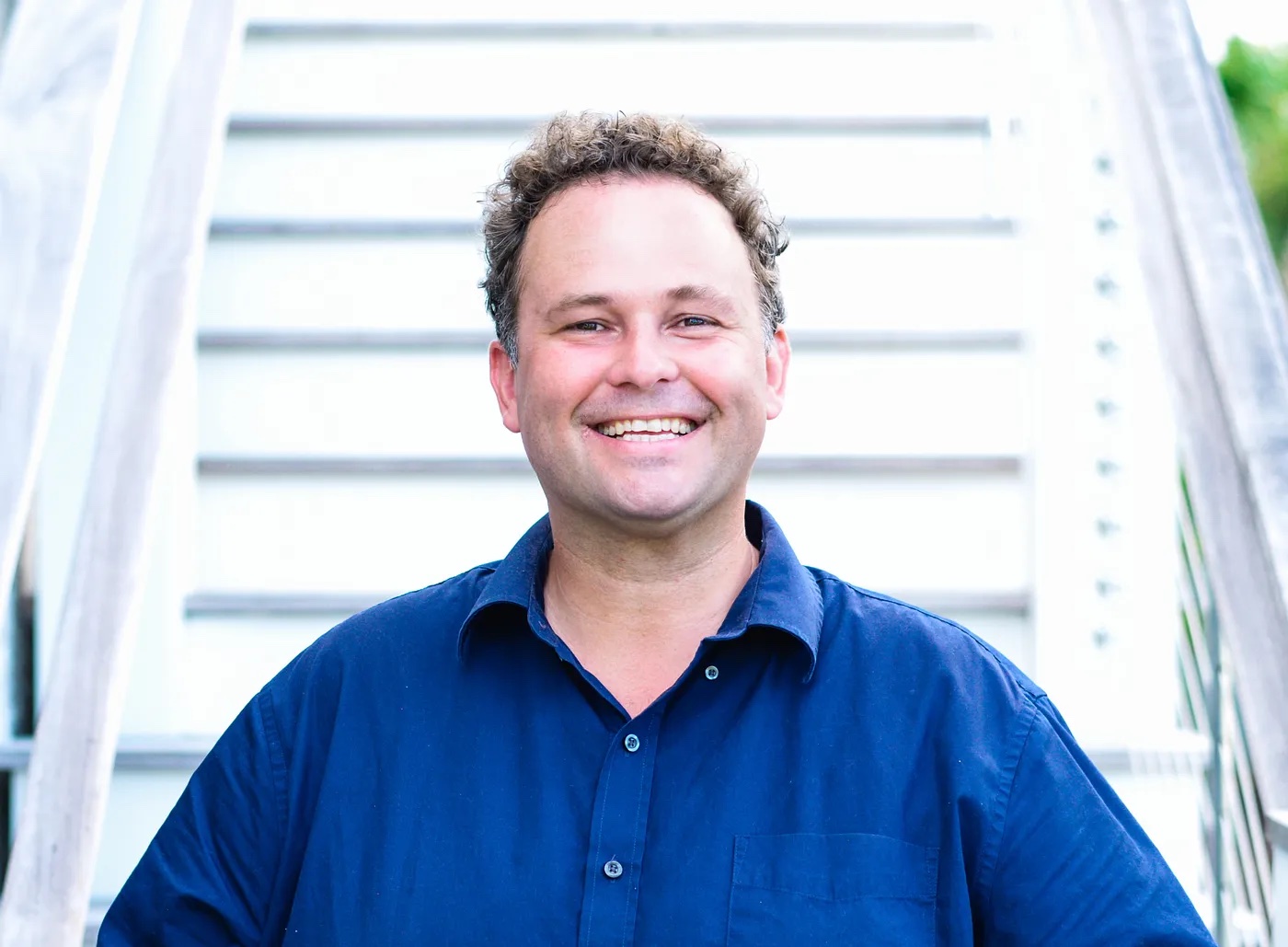
CEO and Co-founder, 1440
Tim Huelskamp is the CEO and co-founder of 1440, a daily newsletter edited to be as unbiased as humanly possible. A former venture capitalist based in Chicago, Huelskamp is leveraging his experience in helping startups scale to grow 1440 to meet the needs of millions of Americans. He worked in VC/PE at American Capital in both the technology investing and operations teams. He also served as VP of finance and operations at BG Medical, a startup medical device supplier, and as a senior analyst in the Technology Investment Banking Group at Jefferies & Company. He earned his bachelor’s degree from Boston College – Carroll School of Management.