Public in Theory, Hidden in Practice: Why an MIT Engineer Left Big Tech to Fix the Civic Information Gap Before the 2026 Midterms
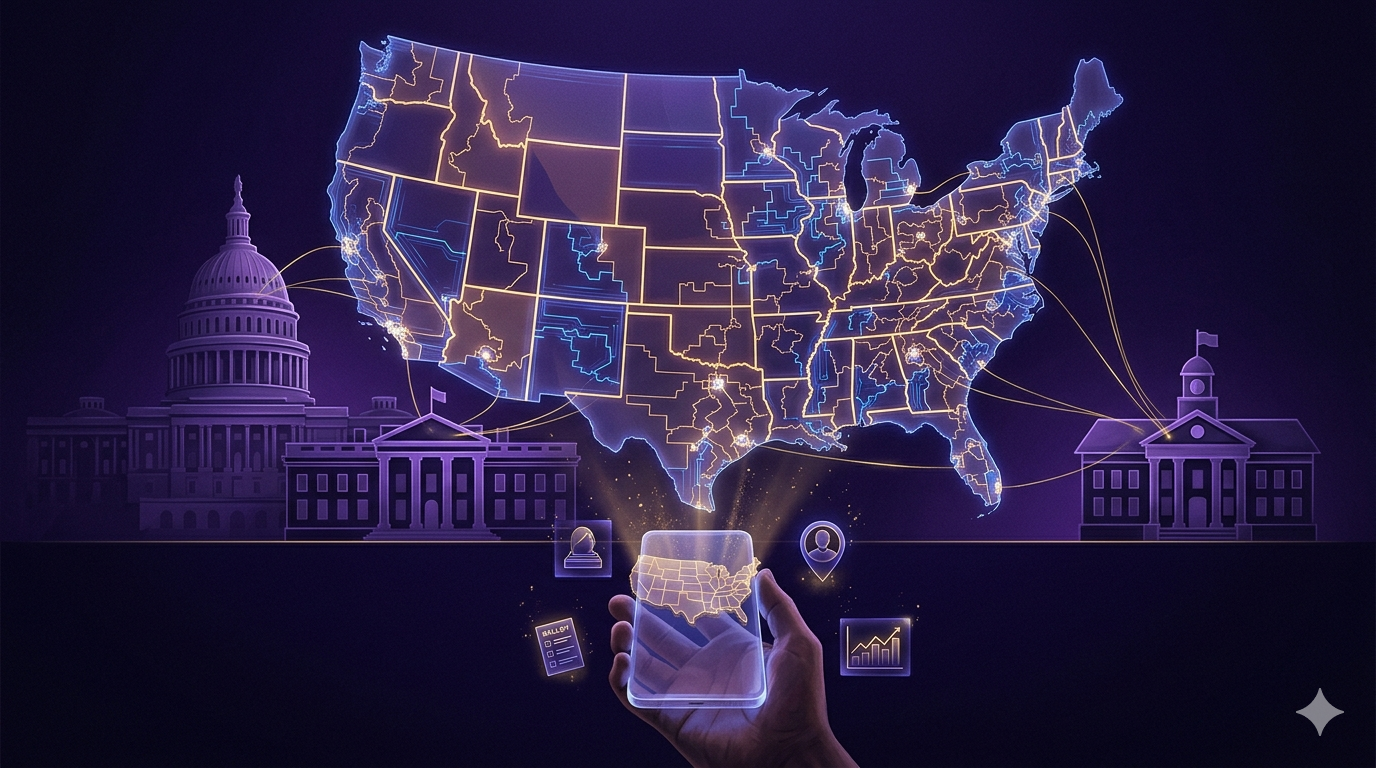
There is a quiet problem at the center of American democracy, and it has nothing to do with partisanship. It is a data problem.
Government information in the United States is, by law, public. Voting records, campaign finance filings, committee memberships, sponsored bills, every move your elected representatives make on your behalf is supposed to be visible to you. In practice, almost none of it is. The information lives in fifty one separate state systems, federal databases with broken or impenetrable APIs, and county websites that look like they were built in 2003. If you want to know how your state senator voted on a housing bill last month, you can find that information. It will just take you ninety minutes, three browser tabs, and a working knowledge of legislative jargon.
Most voters do not have ninety minutes. So they do not check. So they vote based on whatever happens to land on their social media feed, or they skip the down ballot races entirely, or they sit out the midterms because none of it feels real or actionable.
Devin Neal thinks that gap is one of the biggest threats to a functioning democracy, and he left a career in big tech to do something about it.
Who is Devin Neal
Devin is the co founder of Civic, an app on a mission to make democracy more accessible. He is a software engineer with experience at Google, Meta, and Cash App, and holds degrees in computer science and mathematics from MIT. Before going full time on Civic, he built EulerStudio, an educational animation platform designed to translate complexity into clarity. That is the through line of his entire career: taking data that intimidates people and making it usable.
When the 2024 election happened, he stopped waiting. He went full time on Civic and set a hard deadline. He wants the app fully built out before the 2026 midterms.
What Civic actually does
Right now, Civic gives you a map. You open the app, it asks for your location, and it shows you the people who represent you at three levels: federal, state, and where supported, municipal. Names, photos, party affiliations, and contact information for every representative in your area. You can pan around the map, explore other states, see who represents your friends in other cities, and get a real sense of just how many elected officials are operating on your behalf that you have probably never heard of.
Recently, Civic added Federal Election Commission data, so you can also see fundraising figures for upcoming House races. Future versions will include voting records, committee memberships, sponsored bills, electoral history, and eventually a notification system that alerts you when your representatives take action on issues you care about.
The longer term vision is bigger. Devin wants Civic to be a one stop shop for any public government information you might want to find. Inflation data, federal funding flows, multilateral trade agreements, even basic information about heads of state in other countries. The premise is simple: if it is public information, it should actually be public.
Why this matters for the 2026 midterms
The 2026 midterms are shaping up to be one of the most consequential election cycles in recent memory. Every seat in the U.S. House of Representatives is on the ballot. Thirty five Senate seats are in play. Thirty nine gubernatorial races. Hundreds of state legislative contests. Several states, including Ohio, will be using newly redrawn congressional maps. Voter passion is climbing in response to the current administration. The infrastructure to channel that passion into informed decision making, however, is missing.
This is where civic tech becomes infrastructure. Apps like Civic do not replace civic responsibility, they make it possible. They convert raw public data into something a busy voter can actually use in the five minutes they have between dropping kids off at school and getting to work.
The harder questions
The conversation in this episode does not stop at the feature list. We dig into the harder territory:
- How does Civic stay credible when half the country is primed to dismiss any new information source as biased?
- What happens if Republican controlled states make public data harder to access, similar to how several states pulled out of ERIC after that organization started encouraging unregistered voters to register?
- Where does AI fit ethically in a civic tech product, and where does it absolutely not belong?
- What can politicians like Zohran Mamdani teach the rest of the political class about radical transparency and meeting voters where they actually live, which is on social media?
Devin's answer to the credibility question is the cleanest part of the conversation. You source everything aggressively. You let people argue about interpretations all they want. You do not let them argue with the underlying voting record. Facts grounded in primary sources are the floor. Everything else is conversation.
The bottom line
Information access is not a glamorous political issue. Nobody is going to run a campaign on civic tech infrastructure. But the quiet, structural problems are usually the ones that shape outcomes. If voters cannot easily see what their representatives are doing, accountability collapses. If accountability collapses, representation collapses with it.
Civic is one attempt to rebuild that floor. It is not the only attempt, and it will not be perfect, but it is exactly the kind of project that more people in tech should be spending their best years on instead of optimizing ad targeting algorithms.
Listen to the full conversation on Purple Political Breakdown: https://podcasts.apple.com/us/podcast/the-civic-app-devin-neal-on-finding-your/id1626987640?i=1000764108550
Learn more about Civic: https://www.civicpolitics.com
Podcast Host
Navigating the vast amount of bouncing around the political spectrum my entire life I have finally figured something important out. It doesn't matter. I've been religious, been in the military, went to a liberal school and all in all none of the political biases matter. We shouldn't let toxic discourse cloud our judgement and find a solution through logic and conversation. In pursuit of this mission I created this podcast to focus on these important conversations.


