What Happens When a Republican Candidate Actually Brings a Plan to the Table — Lessons from Ohio's 9th District

There is a particular kind of fatigue in American politics that has nothing to do with ideology. It is the fatigue of listening to candidates talk without saying anything.
I host Purple Political Breakdown, a nonpartisan political analysis podcast on the Alive Podcast Network. My job is to sit across from candidates, officials, and analysts and push past the surface. Sometimes that works. Sometimes I get rehearsed talking points dressed up as conviction.
This week, I interviewed Anthony Campbell, a Republican running in Ohio's 9th Congressional District primary. The seat is currently held by Marcy Kaptur, who has represented the district for over four decades. She is 80 years old. And despite the district being redrawn, she has held it through multiple cycles against Republican challengers.
What made this conversation different was not Campbell's party affiliation. It was that he showed up with specifics.
Healthcare as a Structural Problem
Campbell has spent over a decade in the healthcare industry — community health centers, large insurers, private practices. He holds dual master's degrees in business administration and health services administration from Xavier University.
His central argument on healthcare is that roughly half of total healthcare costs in the United States are attributable to administrative overhead. His proposed solution is a national reinsurance framework — what he calls "freedom reinsurance" — designed to pool risk across all coverage types: employer plans, Medicare, Medicaid, and Medicare Advantage. The patient still chooses their own plan. The shared risk pool is intended to reduce costs for both insurers and patients.
He also advocates for holding insurance companies to the same malpractice liability standards as physicians. His reasoning is straightforward: if a doctor faces liability for failing to deliver care, the insurer creating administrative barriers to that care should face equivalent accountability.
The deeper strategic point he made was about incentive structures. Insurance companies, he argued, typically oversee a patient for two to three years. That creates a short-term cost reduction mentality focused on quarterly returns rather than long-term health outcomes. Campbell wants to shift the system toward preventative care — what he described as turning "sick care" back into "healthcare." He acknowledged the upfront cost increase but cited a five-year window for measurable returns.
He made the argument personal. His aunt, after losing her husband, struggled to afford four-dollar medications on a fixed income — and never told the family. That, he said, is the story playing out in communities across the country.
Energy Policy Beyond the Binary
This is where Campbell diverges from the prevailing Republican messaging. He supports continued fossil fuel production alongside aggressive investment in renewable energy infrastructure.
His argument is grounded in grid capacity. He cited approximately 150 major renewable energy projects in Ohio's portion of the grid that are in a holding pattern because the grid infrastructure cannot accommodate them. His position is that grid modernization and energy supply expansion — both traditional and renewable — must happen simultaneously.
He referenced Texas as evidence that renewable energy integration can reduce consumer costs, pushing back against the standard Republican framing that renewables inherently increase prices. He also emphasized domestic manufacturing of renewable technology rather than dependence on Chinese solar panels, tying the energy conversation directly to job creation.
He pointed to Ford, Hyundai, and GM as cautionary examples — companies that made billion-dollar bets on renewables and are now shutting down plants due to federal policy shifts, costing American jobs in the process.
His own electric bill jumping from $300 to over $1,000 in a single month gave the argument a visceral anchor. Most families, he noted, cannot absorb that kind of spike.
Immigration, Corruption, and Legislative Reform
On immigration, Campbell's district includes a Canadian border crossing in Sandusky. He advocates for secure borders and proper vetting alongside what he called "compassionate reform." He criticized both parties for decades of performative rhetoric without action, arguing that the country needs representatives who can work across the aisle rather than use immigration as a recurring campaign prop.
On corruption, he is direct: term limits for House and Senate members, a ban on congressional insider trading, and a demand for simplified legislation. He expressed frustration with thousand-page bills that obscure backroom deals and called for legislation written at a level everyday Americans can understand and evaluate.
He also took pointed shots at his primary opponents — noting that two recently relocated to Ohio, one served on a Biden advisory committee, and two others have effectively already lost to Kaptur.
What This Means for Political Engagement
Regardless of where you sit on the political spectrum, there is value in candidates who engage with policy substance rather than relying on identity signaling. Campbell may or may not win the primary. But the quality of his preparation — showing up with a healthcare framework, an energy strategy, and a willingness to break from party orthodoxy on renewables — raises the bar for what voters should expect from anyone asking for their vote.
Ohio's 9th District primary is May 5, 2026. Early voting begins in early April.
Listen to the full interview: https://podcasts.apple.com/us/podcast/ohio-9th-district-primary-anthony-campbells-plan-to/id1626987640?i=1000753771669
Sources:
- Purple Political Breakdown podcast interview with Anthony Campbell, Ohio 9th District Republican primary candidate (2026)
- Anthony Campbell's ABC Plan platform statements as discussed in the interview
- Anthony Campbell's educational background: Bachelor's in Accounting from Liberty University; dual Master's in Business Administration and Health Services Administration from Xavier University (stated in interview)
- Marcy Kaptur tenure in Ohio's 9th Congressional District (public record, Ballotpedia)
- First Energy corruption scandal in Ohio (public record)
- Texas renewable energy cost data (referenced by Campbell during interview)
- Ford, GM, Hyundai EV and renewable energy investment and plant closure decisions (referenced by Campbell during interview)
- Cedar Point operational changes (referenced by Campbell during interview)
- Ohio 9th District primary date: May 5, 2026; early voting begins early April 2026 (stated by Campbell in interview)
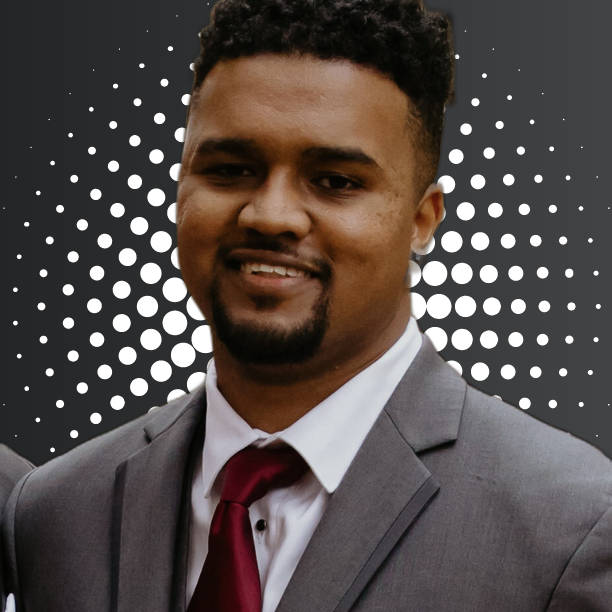
Podcast Host
Navigating the vast amount of bouncing around the political spectrum my entire life I have finally figured something important out. It doesn't matter. I've been religious, been in the military, went to a liberal school and all in all none of the political biases matter. We shouldn't let toxic discourse cloud our judgement and find a solution through logic and conversation. In pursuit of this mission I created this podcast to focus on these important conversations.
"No New Wars" Was Always a Lie — And the Iran Conflict Proves Why Political Accountability Matters More Than Political Branding