Who Audits the Auditor? Ohio's 2026 State Auditor Race and the Quiet Offices That Keep Public Money Honest

The person who keeps Ohio state government financially honest is chosen by voters. Most Ohioans cannot name who currently holds that job. That mismatch between the power of the office and the public's awareness of it is the quiet story of the 2026 Ohio State Auditor race.
The Ohio State Auditor is one of five independently elected statewide executive offices in the Ohio Constitution. The office oversees financial audits of more than 5,900 public bodies (every city, school district, township, state agency, university, and public library in the state) with a staff of more than 800 professional auditors. It can issue findings for recovery against public officials who misuse funds, place local governments into fiscal emergency, and investigate fraud across the public sector. In terms of institutional impact per dollar of campaign spending, it is arguably the most consequential statewide office in Ohio. It is also the office most voters pay the least attention to.
A career stop, not a calling
Current Auditor Keith Faber is term limited and running for Attorney General. His predecessor Dave Yost did the identical move in 2018 and is now running for governor. The Statehouse News Bureau has described the pattern as a game of musical chairs among term limited Republican officeholders. In practical terms, the 2026 Auditor race is the starting line for whoever wants to be Ohio's AG in 2030.
That framing matters. Accountability offices work best when the people running them view the job as the destination, not the launch pad. An Auditor planning their next statewide bid has different incentives than one intent on spending four years buried in audit reports.
The Republican nominee: Frank LaRose
Secretary of State Frank LaRose has served in that role since 2019, following eight years in the Ohio Senate. He is a Green Beret with a Bronze Star and a current Sergeant First Class in the Army Reserve. His statewide record includes real accomplishments: he sponsored Ohio's 2016 online voter registration law, secured funding for electronic poll books, and in 2019 published the state's voter purge list publicly for the first time, a transparency measure that the New York Times reported helped identify about 40,000 errors out of 235,000 names flagged for removal.
His record also includes a pattern of public reversals that raise questions for an office whose core product is institutional trust. In 2022 he led the effort to eliminate August special elections on the grounds of low turnout. In 2023 he reversed and backed an August special election on Issue 1, a proposal to raise the threshold for amending Ohio's constitution from a simple majority to 60 percent. He told reporters publicly that Issue 1 had nothing to do with the upcoming reproductive rights amendment. At a Lincoln Dinner fundraiser he told Republican supporters it was 100 percent about keeping a radical pro abortion amendment out of our constitution. The Libertarian Party of Ohio filed a Hatch Act complaint. Voters rejected Issue 1 by fourteen points.
In late 2025, LaRose's office referred more than 1,200 alleged voter fraud cases to the US Department of Justice. Reporting from the Ohio Capital Journal and News 5 Cleveland found that most cases involved registration mismatches or clerical discrepancies and had not previously resulted in county level prosecutions.
The Democratic nominee: Annette Blackwell
Maple Heights Mayor Annette Blackwell has served since 2015, the first Black mayor and first woman mayor in the city's history. Before politics she spent 16 years at Deloitte and Ryan working on property tax issues. When she took office, her city was in state declared fiscal emergency. She wrote the five year turnaround plan herself, and it worked. Maple Heights has received the Ohio Auditor's Clean Audit Award (the Auditor's most prestigious recognition) every year from 2021 through 2023.
The resume contrast is striking. Blackwell has been operating as the kind of fiscal officer the Auditor's office exists to oversee and reward. She has done the job from the local level and has the awards on her wall to prove it. Her core challenge is not qualification but recognition: Maple Heights has 23,000 residents, and no Ohio Democrat has won a statewide executive office since 2008.
Why this race matters beyond Ohio
The 2026 Ohio Auditor race is, at its core, a test of how seriously we take institutional accountability as a public value. When the office becomes a rung on a career ladder, the incentives shift. When the public tunes out, oversight weakens. The race gives Ohio voters a rare, concrete choice: between a candidate with a resume tailored to political ascent, and one with a resume tailored to the actual work of public sector fiscal oversight. Whichever way voters decide, the decision is worth making with eyes open.
This week's episode of Purple Political Breakdown covers the Auditor race in depth, along with the rest of a consequential news week in Ohio: a quiet administrative rule adding Trump Wildlife Area to the state's wildlife lands, the first major test of Ohio's new campus free speech law after a Nazi salute at Ohio University, a canceled fundraiser for a GOP governor candidate over his Nazi adjacent comments, a resurfaced 2019 police report on Democratic gubernatorial candidate Dr. Amy Acton, federal inspections documenting Ohio nursing homes discharging medically fragile patients to homeless shelters, and a 1.1 million dollar DraftKings linked super PAC campaign in Ohio Republican legislative primaries.
Listen to the full episode here, and sources are at the bottom of this article.
Episode: https://podcasts.apple.com/us/podcast/larose-vs-blackwell-who-should-actually-be-ohios-2026/id1626987640?i=1000762145758
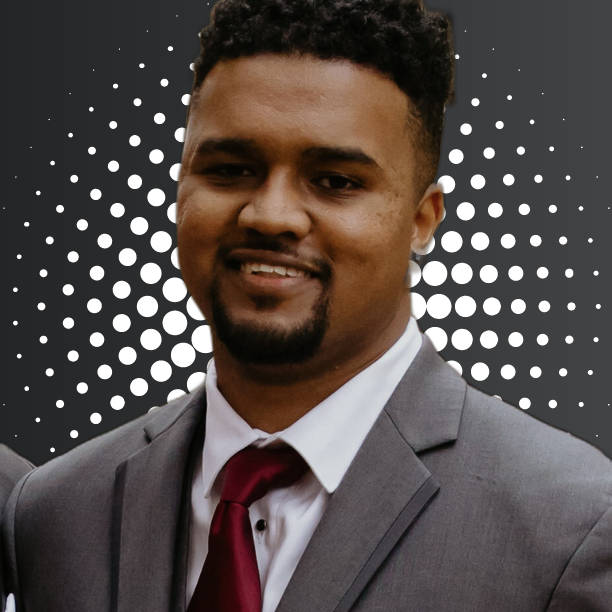
Podcast Host
Navigating the vast amount of bouncing around the political spectrum my entire life I have finally figured something important out. It doesn't matter. I've been religious, been in the military, went to a liberal school and all in all none of the political biases matter. We shouldn't let toxic discourse cloud our judgement and find a solution through logic and conversation. In pursuit of this mission I created this podcast to focus on these important conversations.


