Why Election Day Should Be a Federal Holiday: A Field Report from the Ohio Primary
On May 5, 2026, I voted in the Ohio primary election. I also recorded the entire process, from voter lookup to polling booth, as a bonus episode of Purple Political Breakdown. What I want to share here is not who I voted for. It is what the experience itself revealed about the structural design of American elections.
The 13 Hour Problem
Ohio polls open at 6:30 AM and close at 7:30 PM. On paper, that is 13 hours of access. In practice, it is far less. Most of those hours overlap with a standard workday. A voter working a 9 to 5 has roughly 90 minutes before clocking in and two and a half hours after clocking out to participate in the foundational act of representative democracy. Add commute time, childcare logistics, a meal, and the cognitive fatigue of a full work shift, and the window collapses.
This is not a hypothetical. American voter turnout has consistently lagged peer democracies. We rank below Belgium, Sweden, Denmark, Australia, South Korea, France, Germany, the Netherlands, and most of the OECD in turnout among voting age population. The reasons are well documented: registration friction, polling place access, weekday voting, and an Election Day that is not protected from the demands of work.
Three Reforms That Would Move the Needle
First, Election Day should be a federal holiday. Primary, general, and special elections all qualify. The argument that we already have too many federal holidays does not hold weight when measured against the importance of the underlying civic act. If we can close federal offices for Columbus Day, we can close them so people can vote.
Second, polling hours should be extended significantly, ideally to a 24 hour window with rotating, paid poll workers. The labor cost is trivial compared to the legitimacy gains.
Third, if a federal holiday is politically unworkable in the short term, Election Day should become Election Weekend. Two to three consecutive days of voting access would dramatically expand the window for working people, caregivers, and shift workers.
We should also be expanding mail in voting infrastructure (which already exists in Ohio via absentee ballot, though most voters do not use it) and seriously studying secure online voting pilots.
The Voter Experience Itself
The Ohio Secretary of State website does what it is supposed to do. You enter your information, complete a captcha, and pull your polling location, your district assignment, and a sample ballot. But the experience is not optimized for new voters. The captcha was unnecessarily aggressive. The interface assumes prior fluency with election terminology. Sample ballots and absentee tracking are buried under multiple clicks.
For first time voters, the message embedded in the user experience is: this is not really for you.
What Voters Can Do Now
Until structural reforms arrive, here is what helps. Look up your polling location and sample ballot in advance. Research candidates before you walk in (you can use your phone at the polls to verify names you don't recognize, though courtesy suggests stepping away from the booth). If your schedule allows, vote absentee. The infrastructure exists. Most people simply do not know how to access it.
The Bigger Frame
Low turnout is not a story about voter apathy. It is a story about voter access. When you design a system where the people most squeezed by their work schedules are also the people least able to participate in the political process that shapes their work conditions, the outcome is not surprising. It is engineered.
If we want a representative democracy that actually represents, we have to stop pretending that 13 hours on a Tuesday is enough.
The full bonus episode, including my walkthrough of the Ohio Secretary of State voter tools, my ballot research process, and a breakdown of the May 5 primary races, is live now.
Listen here: https://podcasts.apple.com/us/podcast/should-election-day-be-a-federal-holiday-my-live/id1626987640?i=1000766283851
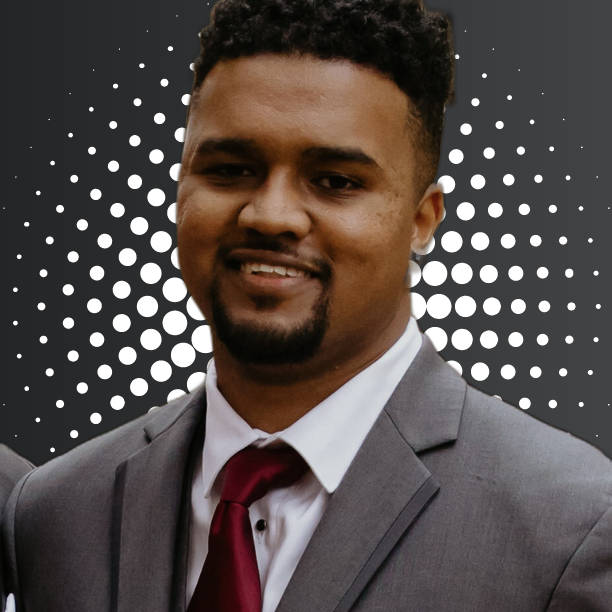
Podcast Host
Navigating the vast amount of bouncing around the political spectrum my entire life I have finally figured something important out. It doesn't matter. I've been religious, been in the military, went to a liberal school and all in all none of the political biases matter. We shouldn't let toxic discourse cloud our judgement and find a solution through logic and conversation. In pursuit of this mission I created this podcast to focus on these important conversations.


