Why Ohio's Two "Safe" House Seats Deserve a Closer Look
We are trained to ignore safe seats. When a district is drawn so far to one side that the result is a foregone conclusion, the political world moves on. This year, two Ohio congressional races test that habit, and both reward a second look.
Ohio's 2nd District in the south is rated solidly Republican. Ohio's 3rd District in Columbus is rated solidly Democratic. Neither is a tossup, and it would be dishonest to suggest otherwise. But a campaign with a known outcome stops performing and starts revealing, and in both districts the Republican candidate carries a story that voters deserve to weigh with clear eyes.
In the 2nd District, Republican incumbent David Taylor faces Democrat Jen Mazzuckelli. Taylor runs on agriculture, an all of the above energy approach including nuclear, border security, and tax cuts. He is also linked to a documented October 2025 controversy, an altered American flag bearing a swastika that appeared on a video call from his congressional office. Taylor described the symbol as obscured and said it was removed immediately. Staffers in other offices that received similar mailed flags publicly disagreed with that account. Mazzuckelli, a former teacher, centers affordability, opposed her county's cooperation with ICE, and supports a bipartisan Epstein commission. She is also significantly under-resourced, a reminder that the decision about which districts to fund is made long before voters ever weigh in.
In the 3rd District, seven-term Democrat Joyce Beatty faces Republican Cleophus Dulaney. Beatty is well funded and runs on a health care public option, a fifteen dollar minimum wage, collective bargaining rights, and civil rights protections. Dulaney presents a striking contrast between platform and biography. His positions are notably populist for a Republican, including letting Medicare negotiate drug prices, fair maps, and an explicit commitment against political violence. Yet he was arrested in 2024 and charged with assaulting law enforcement during the January 6 Capitol attack, a prosecution that ended only when the President ordered all such cases dropped.
The same week delivered a full slate of Statehouse developments. The Ohio Senate advanced a constitutional amendment requiring photo identification to vote in person, a requirement already in state law since 2023, while notably leaving absentee and mail-in ballots outside its scope, a gap that even some Republicans flagged. State officials approved a forty two million dollar data center sales tax exemption just before the Governor's temporary pause took effect. The Ohio Supreme Court ruled that a person federally barred from firearms due to a felony domestic violence conviction may petition the state to restore those rights, drawing a pointed dissent. And the Justice Department announced a statewide fraud crackdown.
The most consequential item, in my view, is an education proposal. Ohio is preparing to seek a federal waiver from parts of the Every Student Succeeds Act that could allow the state to close low-performing public schools or transfer them to private operators. Educators note that this revives closure and privatization provisions the state Senate had just removed from a bill after public opposition. It is a clear example of process worth watching closely, regardless of where you land on the policy.
The throughline across all of it is affordability. In a red seat and a blue seat alike, candidates are talking about the cost of groceries, housing, health care, and prescriptions. They disagree on the cause and the cure, but they agree on the problem. That is the real debate, and it does not stop being real just because a district is considered safe.
Full breakdown on the podcast: https://podcasts.apple.com/us/podcast/a-swastika-in-one-office-a-jan-6-arrest-in-the/id1626987640?i=1000771487401
Political solutions without political bias. A better Ohio, because we want a better America.
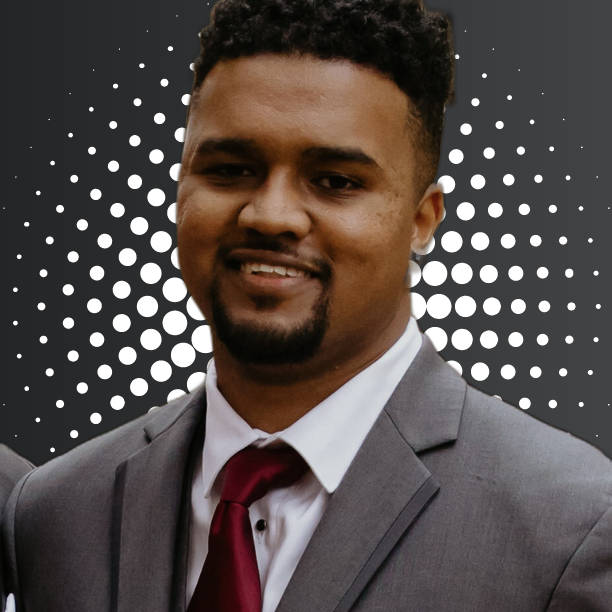
Podcast Host
Navigating the vast amount of bouncing around the political spectrum my entire life I have finally figured something important out. It doesn't matter. I've been religious, been in the military, went to a liberal school and all in all none of the political biases matter. We shouldn't let toxic discourse cloud our judgement and find a solution through logic and conversation. In pursuit of this mission I created this podcast to focus on these important conversations.


