Ohio's 2026 Primary: What the Tightest Turnout Split Since 2006 Actually Tells Us
On Tuesday, May 5, Ohio held its 2026 primary election. 791,355 Democrats requested ballots. 817,159 Republicans did the same. That gap is the tightest the state has seen in a midterm primary since 2006, the year that became a high-water mark for Ohio Democrats. In 2022, by contrast, Republicans pulled nearly twice as many ballots as Democrats. Something has shifted. Whether it predicts November is the bigger question, and on this week's Purple Political Breakdown Ohio Edition, that's where I started.
What the Numbers Tell Us, and What They Don't
Ohio Democratic Party Chair Kathleen Clyde framed it as the highest Democratic midterm primary turnout since 2006, drawing the parallel to a second term of an unpopular Republican president. UVA political analyst Kyle Kondik pushed back: primary turnout does not have predictive value for November because the most engaged voters are not representative of the broader electorate.
Both can be true. The signal is real. The forecast is thinner than the headline suggests. Democratic gains concentrated in Columbus and Cincinnati, including Butler County, where Democratic ballot requests doubled to roughly 15,000. Eastern and western Ohio, the regions where the party has been losing for over a decade, still showed Democratic decline. That is the gap that has to close before any of this becomes a wave.
The Inside-the-Party Story Was Bigger Than the Inter-Party One
The most interesting fights this cycle were not between parties. They were inside them.
In the Republican treasurer primary, Vice President JD Vance endorsed Jay Edwards. Vivek Ramaswamy, the Republican gubernatorial nominee, endorsed Sen. Kristina Roegner. Edwards won by roughly seven points. That puts Ramaswamy at the top of his own party's ticket, having lost a downballot proxy fight to his own running mate, in a race for an office that controls the state's unclaimed funds.
Speaker Matt Huffman backed primary challengers against Reps. Jason Stephens and Ron Ferguson. Both incumbents survived. Huffman did get a win in the Akron-area House race where Mike Kahoe defeated Stephanie Stock. The story is not that Huffman lost. It is that the caucus is not fully consolidated under him.
Then there is the Browns stadium money. Last year, Democrats ran on the $600 million in unclaimed funds the legislature voted to send the Cleveland Browns. This year, Republican primary mailers are running on it. Craig Reidel against Sen. Jim Hoops. Patty Hamilton against Rep. Brian Stewart. Dillon Blevins against Rep. Jean Schmidt. Both treasurer candidates publicly distanced themselves from the deal. When billionaire stadium funding becomes a populist attack line inside a Republican primary, you are watching a real shift in where the energy lives.
The Policy Stories That Matter Most
Forty-two of 66 school tax levies failed Tuesday. Sen. Jerry Cirino, who chairs Senate Finance, told reporters this reflects tax fatigue and dissatisfaction with public school quality. Then he floated K-12 school consolidation, which is the closest thing to a third rail in Ohio education politics. Bill Phillis at the Ohio Coalition for Equity and Adequacy of School Funding pushed back: the state has systematically underfunded schools, and now districts are asking already-squeezed voters for help.
The Ohio Supreme Court ruled that submetering companies are public utilities and must be regulated as such. Tens of thousands of renters, especially in Columbus, are now in line for price controls and consumer protections they have not had for years.
In Richland County, a pro-solar referendum to overturn a county ban on large-scale wind and solar lost 53 to 47. It is the second pro-solar referendum failure since these were established in 2021. The local coalition framed it around property rights and government overreach. They lost, but tightened the margin well below what the county's partisan lean would predict. There is momentum there, even in a county Trump carried decisively.
The News Voters Need in Their Head
Sen. Jon Husted is already running ads in Cleveland, Columbus, and Toledo despite no primary challenger. The top Senate Republican PAC has announced $79 million to defend him, the most they plan to spend in any battleground state. Brown vs. Husted will vacuum oxygen out of every other race.
House Majority PAC has reserved $10.8 million in Ohio TV and digital, including $4.7 million targeting Reps. Mike Turner and Mike Carey, and $3 million defending Rep. Marcy Kaptur in OH-9. Democrats are spending nearly as much defending Kaptur as attacking Turner. That tells you where they think the floor is.
The Ohio Controlling Board approved $2.9 million for repairs at the governor's mansion in Bexley. Roof, HVAC, elevators, air vents. Not a scandal, but worth saying out loud in the same week 42 school levies failed.
The property tax abolition campaign needs roughly 413,000 valid signatures by the end of June, including a minimum from 44 counties. A new opposition coalition called Ohioans to Protect Public Services has launched, backed by emergency responders, social services, unions, and business groups. Citizens Against Property Taxes is holding a press conference in Geauga County in an Oval Office replica. If they qualify for the ballot without major financial backing, they will be the first ballot issue campaign in recent memory to do so.
A Correction I Owe My Audience
I want to address something directly. After the last election, I put out a post and an episode focused on Election Day inconveniences, and I framed it as if Election Day was the only access point voters had. That was wrong of me. Ohio has early voting. Ohio has absentee and mail-in voting. I should have named those tools clearly, and I did not. I am a podcaster who is willing to correct his mistakes, and I am correcting that one now.
The broader point still holds. A tool is only useful if people know it exists, know how to use it, and know when to use it. Election Day gets broadcast nonstop. People know it exists. Plenty of them still do not vote. Early voting and absentee voting do not receive the same normalization, the same airtime, or the same accessibility. If Ohio is serious about voter participation, we need to make those tools more accessible, more streamlined, and more known across every county. And we should expand Election Day into an election weekend or an election holiday. Leaving turnout on the table is a policy choice, and it is the wrong one.
Where I Land
Two takeaways.
One: Democratic engagement in the primary is real, but the predictive case for November is thinner than the turnout headline suggests. Take it as a temperature reading, not a forecast.
Two: the most interesting fights this year are inside the parties. GOP primaries running against the Browns stadium deal. Huffman losing two of his three picks. Vance and Ramaswamy on opposite sides of a treasurer race. November will be decided at the top by Brown vs. Husted and the governor's race, but the texture of Ohio politics is shifting underneath both contests, and that is the part voters should be tracking week to week.
Political solutions without political bias.
Listen to the full episode here: https://podcasts.apple.com/us/podcast/who-won-ohios-2026-primary-and-what-does-it-mean-for-november/id1626987640?i=1000766976027
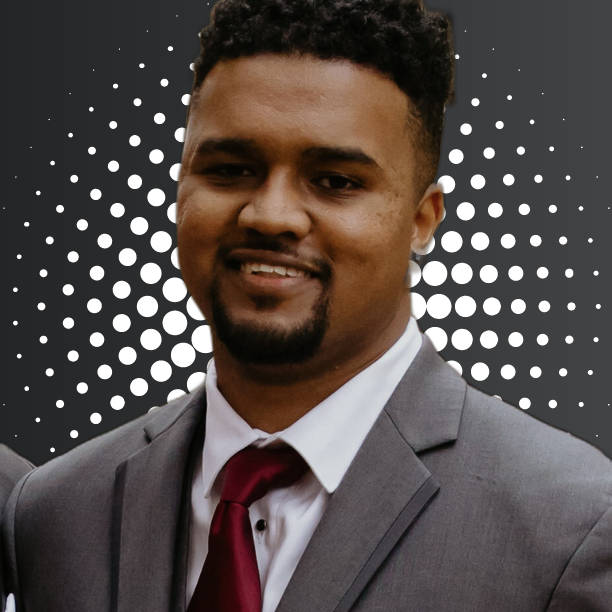
Podcast Host
Navigating the vast amount of bouncing around the political spectrum my entire life I have finally figured something important out. It doesn't matter. I've been religious, been in the military, went to a liberal school and all in all none of the political biases matter. We shouldn't let toxic discourse cloud our judgement and find a solution through logic and conversation. In pursuit of this mission I created this podcast to focus on these important conversations.


