What Ohio's 12th District Tells You About the 2026 Midterms
Ohio's 12th Congressional District is rated safe Republican, and by every conventional measure it is. Troy Balderson won it by 37 points in 2024. The Cook Political Report describes the Republican primary as effectively the general election. If you read only the ratings, there is nothing to see here.
I spent an hour this week with Jerrad Christian, the Democratic nominee taking on Balderson for the second cycle, and I came away thinking the interesting thing about this district is not the margin. It is the set of problems that do not sort by party, and the fact that both candidates are now being asked about them.
Data centers are the sleeper issue of this cycle in Ohio.
Eighteen Ohio municipalities and townships have data center questions on the November ballot. In Licking County there is an organized push to ban facilities over 25 megawatts. In Pickaway County the Ohio Supreme Court had to order a village clerk to forward a referendum petition to the board of elections. In Clinton County, residents have gone to federal court over how a project was handled.
None of that is coming from a national party. It is neighbors filing petitions about heat, water, noise, and electric bills, and about who decides where a building the size of several city blocks goes. Christian's position is that some of these facilities are necessary but that Ohio is siting them badly and without local consent. Balderson's related work has focused on grid reliability. His Reliable Power Act, which requires federal agencies to weigh grid reliability before finalizing regulations, passed the House 225 to 203. Those are two different answers to the same underlying pressure, and voters in this district will be choosing between them.
Hospital math is local, and it is specific.
Balderson voted for the reconciliation law that CBO scores as cutting roughly $911 billion in Medicaid and CHIP spending over a decade. He also drew credit from the Ohio Hospital Association for stripping out provisions that would have triggered immediate state Medicaid cuts and for helping expand the Rural Health Transformation Fund to $50 billion nationally, worth an estimated $1.3 billion to Ohio.
Whether that nets out is a live argument. KFF put Ohio's rural Medicaid losses at about $6.45 billion over ten years and found the rural fund covers roughly a third of projected rural losses nationally. A Public Citizen analysis this spring flagged Coshocton Regional Medical Center, inside the 12th District and the only source of acute inpatient care in its area, as financially at risk. Public Citizen is careful to say the list is descriptive, not predictive. That caveat matters. So does the fact that the hospital is real, the county is real, and the drive to the next one is long.
Health care costs are the argument, not the slogan.
Christian makes the single payer case in cost terms rather than moral ones: Americans already pay more per person than any peer nation, and the premium he pays doubled at his own open enrollment. I pushed back on implementation and on the public option as a middle path, and he did not take the middle path. Balderson's visible health work this Congress is his Digital Health Screeners Act, which would codify the FDA's updated wellness guidance and create a lighter pathway for low risk screening features on wearables. He frames it as innovation with safety guardrails. Christian frames it as no answer at all for a family that cannot afford a plan. Both of those descriptions can be quoted accurately. Voters get to decide which problem they are actually trying to solve.
The ballot itself is on the ballot.
Issue 3, the only statewide question this November, would move Ohio's existing photo ID requirement from statute into the constitution. It changes nothing on Nov. 3 and makes future change harder. Christian calls it a waste of time designed to force a wedge. Supporters call it durable protection for election integrity. Both readings can be true, because the disagreement is about permanence, not about whether IDs will be required.
Why any of this matters outside the 12th.
Safe districts are where accountability gets thin. When the outcome is assumed, the incumbent's record gets less scrutiny and the challenger gets less coverage, and the voters who live there end up with the least information about the person who represents them. The fix is not to pretend the ratings are wrong. It is to cover the district anyway, ask both candidates the same questions, and publish the receipts.
That is the whole project on the Ohio side of this show: political solutions without political bias, one district at a time.
Radell Lewis Host, Purple Political Breakdown: Ohio Edition ALIVE Podcast Network
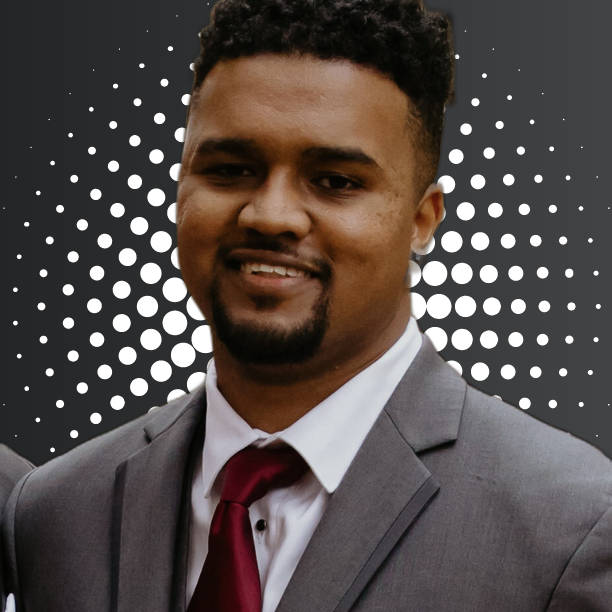
Podcast Host
Navigating the vast amount of bouncing around the political spectrum my entire life I have finally figured something important out. It doesn't matter. I've been religious, been in the military, went to a liberal school and all in all none of the political biases matter. We shouldn't let toxic discourse cloud our judgement and find a solution through logic and conversation. In pursuit of this mission I created this podcast to focus on these important conversations.


